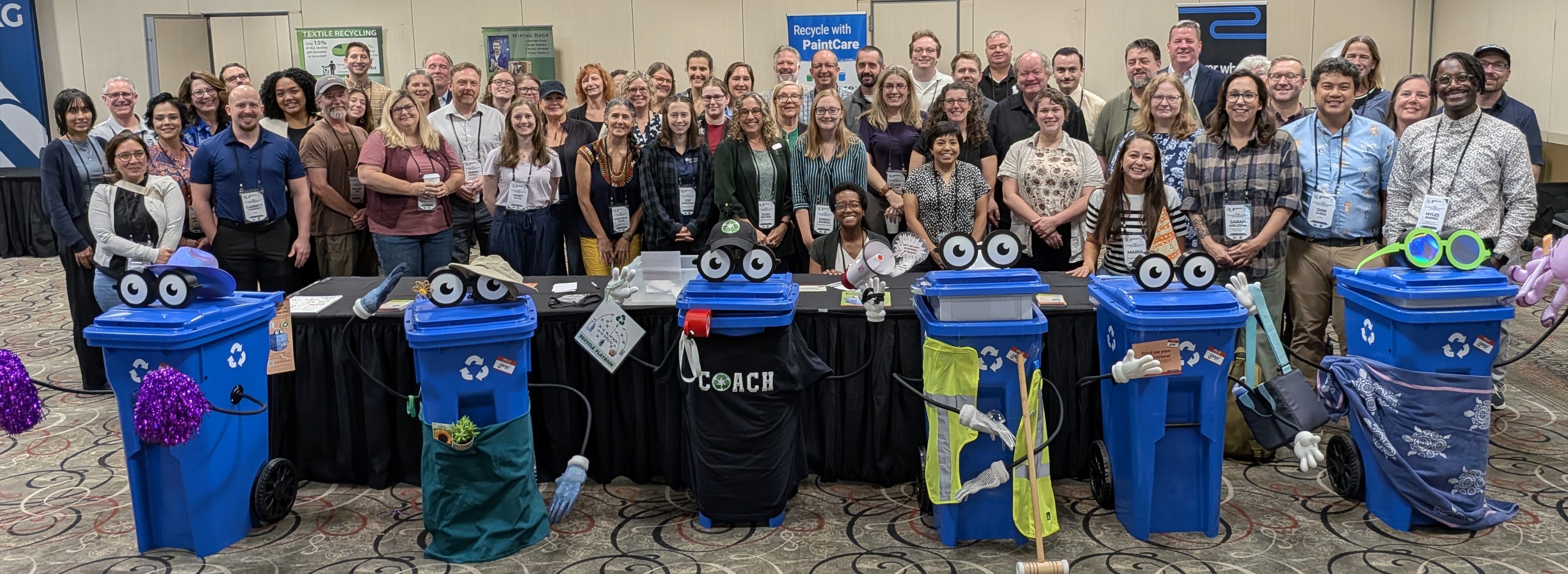
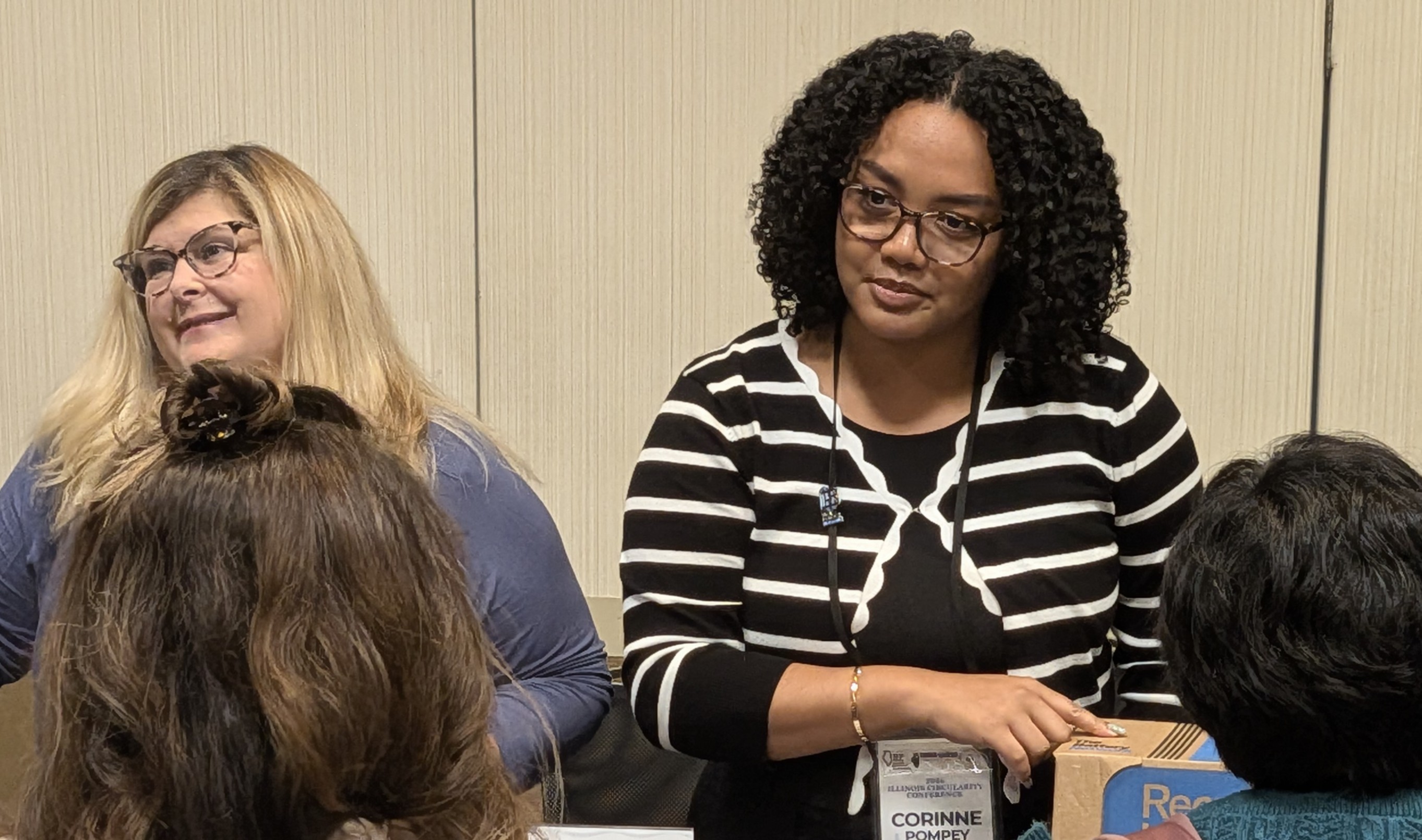
TINLEY PARK, Ill. — As the battery breakout got underway Wednesday afternoon, Loren Williams reached into his backpack, then his pockets, and started making a pile on the table. There were 11 batteries. They were not props he had brought for a demonstration; they were simply the batteries he happened to be carrying around, tucked inside devices ordinary enough that most of us rarely think about what powers them. Williams, an Illinois Recycling Foundation board member who was filling in as moderator for Aaron Harmon, had accidentally produced a pretty good visual summary of the problem.
The waste stream has changed. Batteries are built into products that did not contain batteries a generation ago. Packaging can be technically recyclable but practically unmarketable. Food can move from a grocery distribution center into an anaerobic digester, into a gas pipeline and eventually back onto farmland as a soil product. A cardboard box that looks ready for the recycling cart may still have 20 useful trips left in it, while a university dorm desk that no student wants may still have a perfectly good future as a child’s dresser.
The systems built to manage all of those materials were largely designed for another era. That tension ran through the 2026 Illinois Circularity Conference, held August 19–20 at the EVEN Hotel and Tinley Park Convention Center and hosted by the Illinois Recycling Foundation and SWANA Illinois, with The Battery Network as Title Sponsor. The program moved deliberately from federal and state environmental leadership into statewide recycling data, organics, textiles, batteries, public engagement, paper, packaging, reuse and producer responsibility, then spent Day Two asking what actual infrastructure—physical, legal, financial and human—will be required to make any of it work.
Nobody in those rooms needed to be convinced that Illinois should recover more material. The harder questions had arrived: Who pays for the system? Who collects the material, processes it and reports the data? Who explains it to residents? What happens when the technology exists but the financing does not, or when a collection program succeeds only to discover there is no viable processor or market downstream?
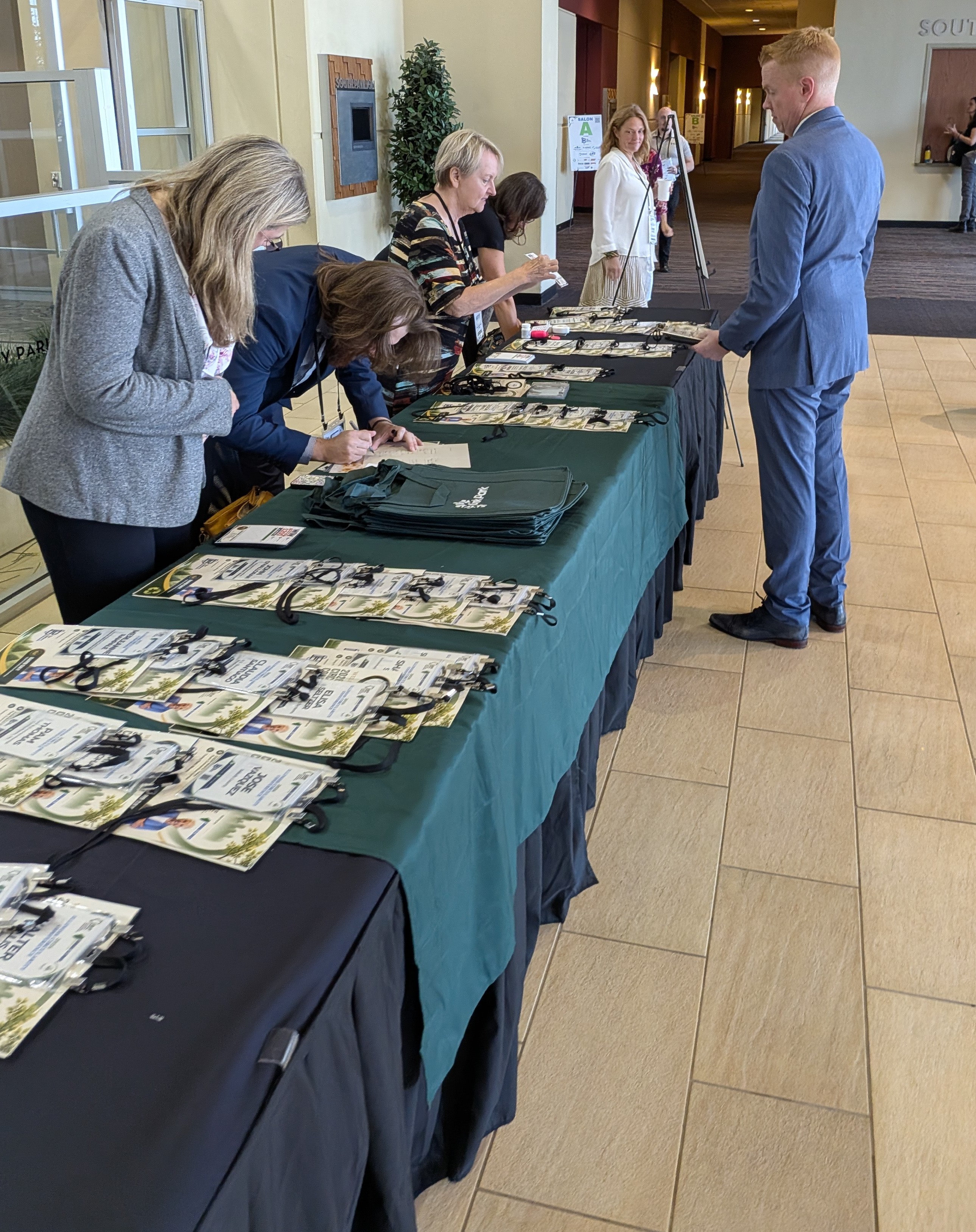
A federal-state keynote with actual stakes
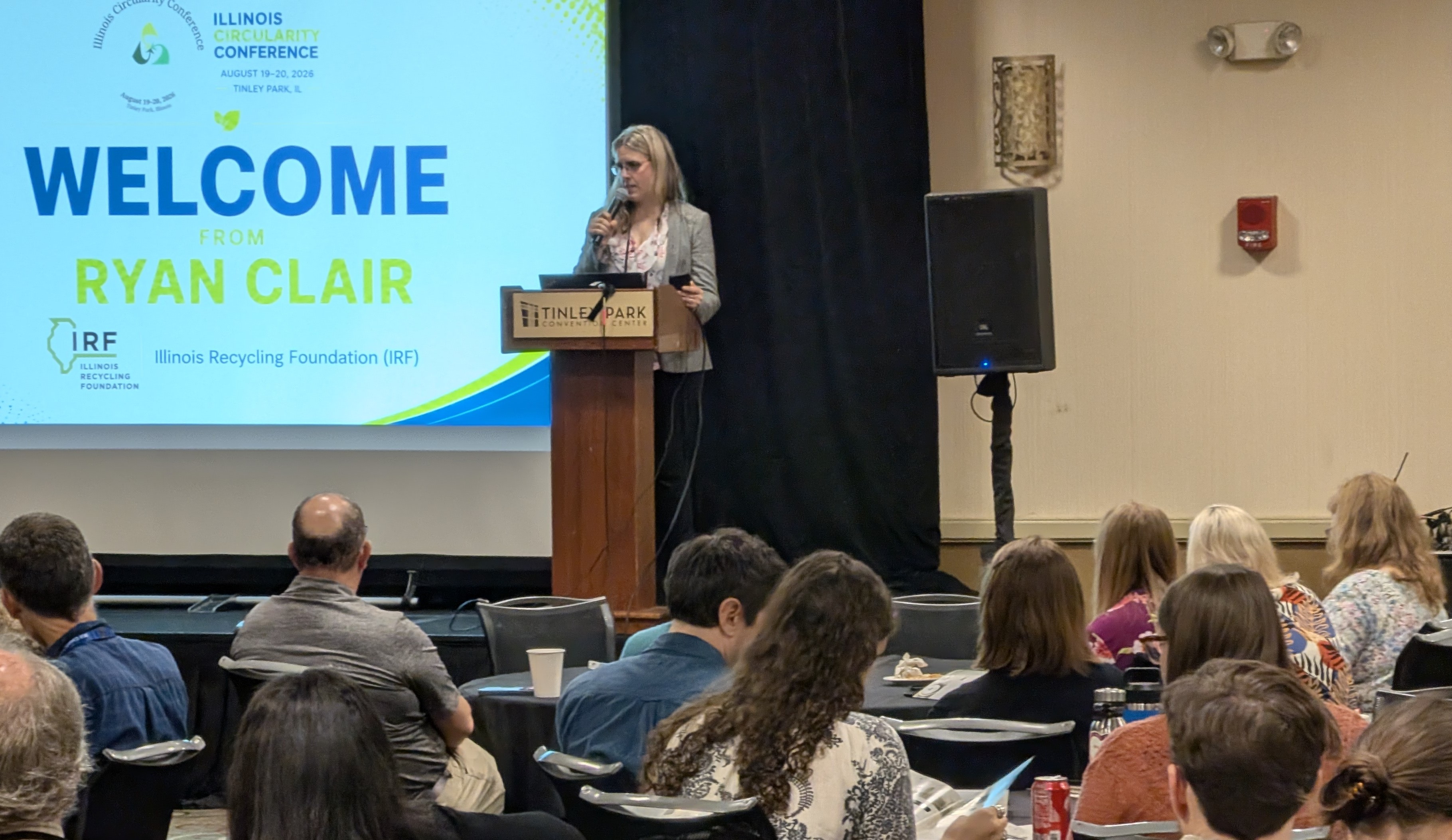
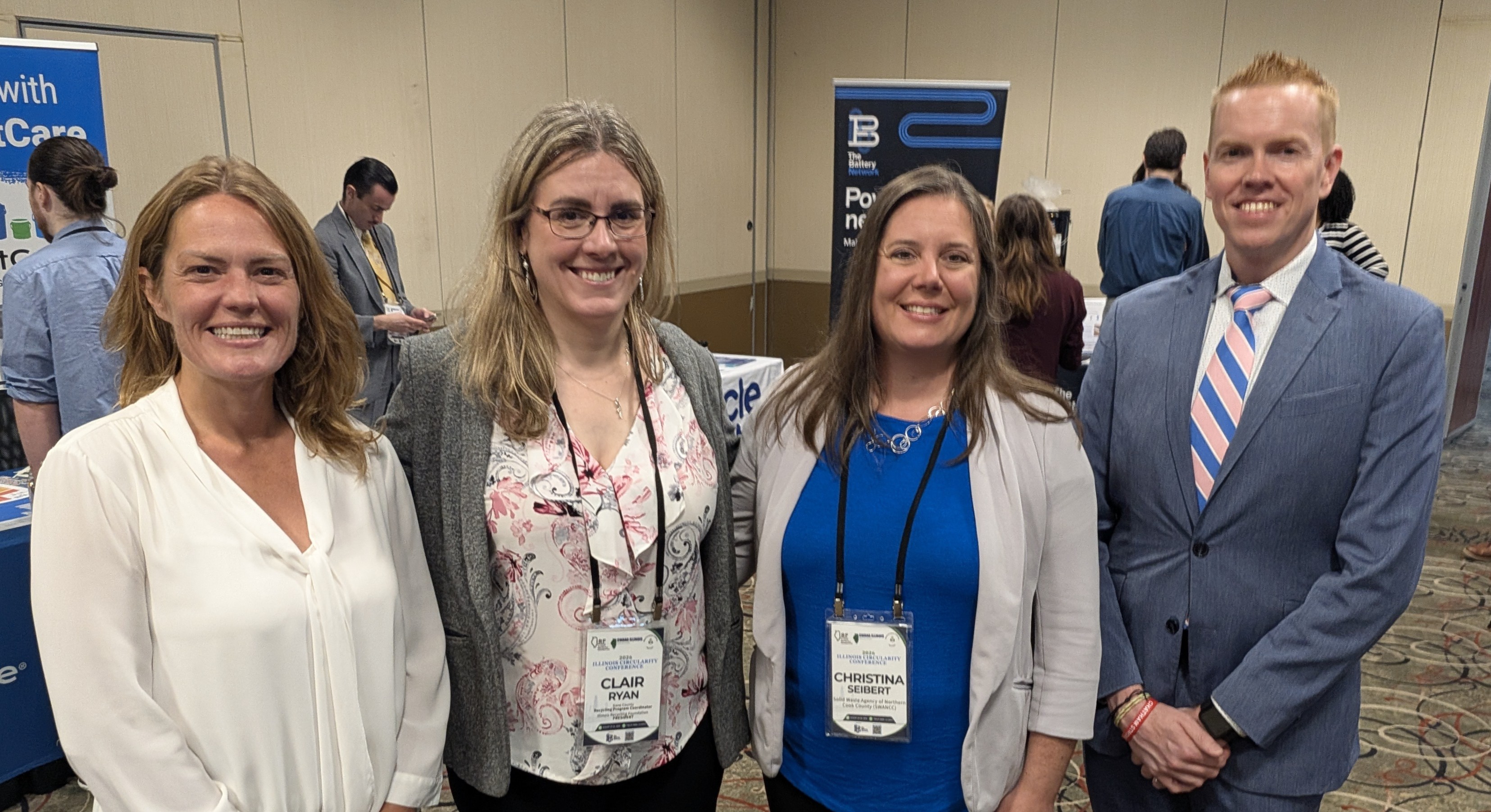
U.S. EPA Region 5 Regional Administrator Anne M. Vogel and Illinois EPA Director James Jennings shared the opening keynote, moderated by Roxane Peggs of The Battery Network. The pairing mattered because their governments are not moving in lockstep, and neither speaker behaved as if the room needed to be protected from that fact. Vogel spoke positively about Jennings and eventually handed the program over to “my friend James.” Jennings later returned the respect, praising Vogel and the career staff at Region 5 for continuing to work constructively with Illinois even when disagreements with Washington are significant.
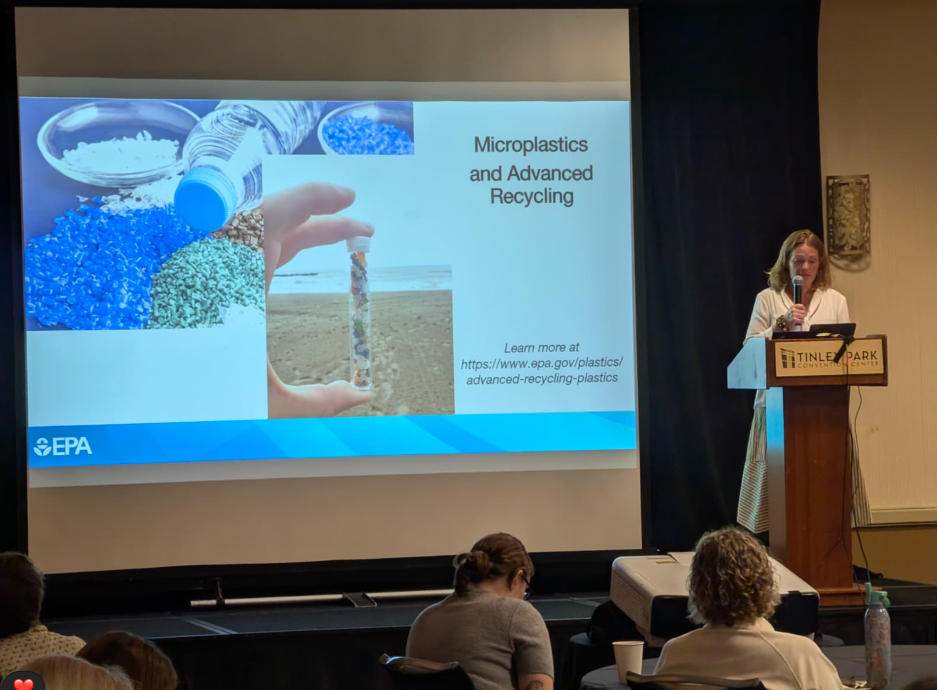
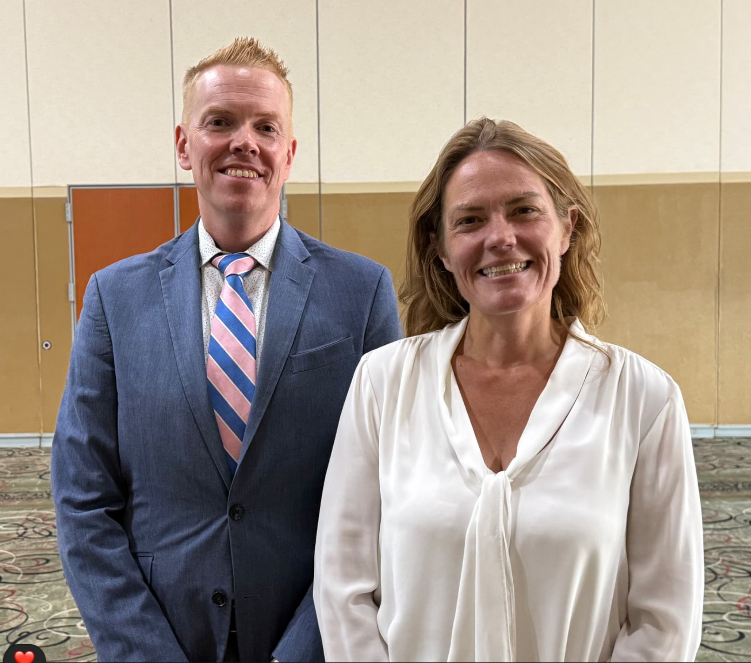
Much of Vogel’s presentation covered areas of circularity unlikely to divide the room, and she grounded most of it in things she had seen herself. She has been visiting waste and recycling facilities around the region, including MRFs and polymer-recovery operations, and one request to the audience came back several times: invite regulators into your facilities. Seeing the equipment operate and watching material move through a line, she argued, tells a regulator something a written rule cannot about how policy behaves in the real world.
On food waste, Vogel pointed to Illinois organizations including The Urban Canopy and Green Era, whose South Side anaerobic digester would come up repeatedly throughout the conference. On PFAS in biosolids, she described the balance regulators are trying to strike between returning valuable nutrients to soil and preventing persistent chemicals from moving with them. She also discussed water reuse as a circularity issue, noting that treated wastewater reused for industrial cooling can conserve potable supplies, defer expensive expansions and reduce pressure from major industrial loads.
Vogel pointed to nearly $5 million in federal funding for Chicago to establish curbside yard-waste collection, initially reaching about 36,000 households. Other federal recycling infrastructure money has supported regional education and statewide waste-characterization work. The theme running through that portion of her remarks was uncomplicated: federal environmental programs can move money and technical capacity into Illinois projects even while larger political disagreements occupy Washington.
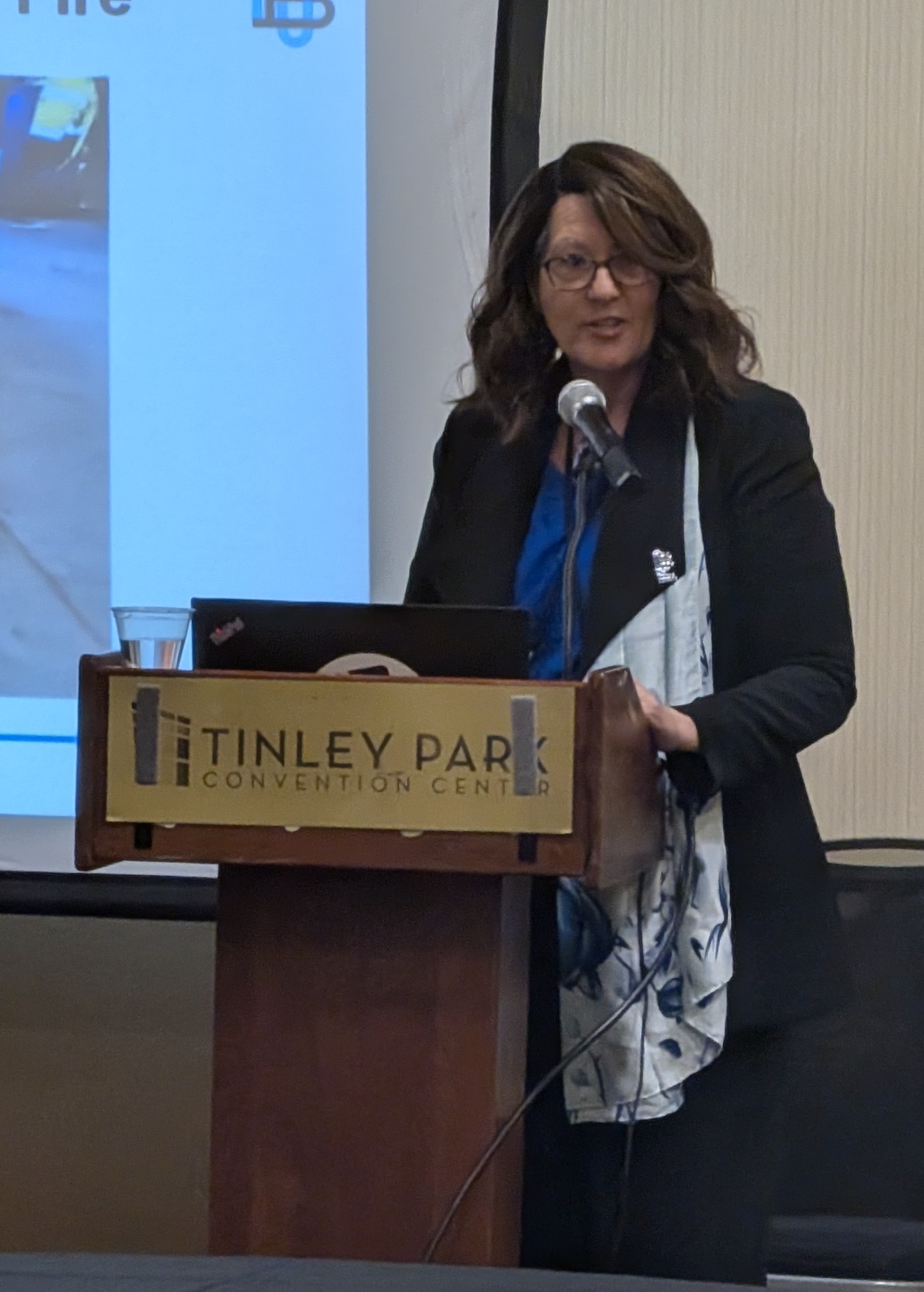
Then Vogel played a video about advanced recycling. Her argument was direct: pyrolysis, which uses high temperatures in an oxygen-limited environment to break plastic into smaller hydrocarbon components, is being constrained by federal rules that treat the technology too much like conventional incineration, she said. Roughly 90 potential advanced-recycling facilities around the country are being held back by regulatory uncertainty, according to the case she presented, and she characterized the existing federal treatment as an outdated classification written before the current technology was contemplated.
EPA, Vogel said, is taking “a fresh look” at the federal treatment of pyrolysis.
Anne Vogel · U.S. EPA Region 5That was not a throwaway line buried inside a generic recycling keynote. Pyrolysis remains one of the most contested questions in plastics policy. Supporters see an outlet for difficult plastic streams and a potential route back to chemical feedstocks; critics question economics, emissions, energy requirements and whether outputs ultimately used as fuels should count as recycling at all. Vogel brought that debate directly into a room filled with municipal recycling professionals, processors, local-government officials, product-stewardship advocates and waste-industry representatives, and she did not hedge the federal position.
Jennings did not pretend Illinois and Washington agree
Jennings acknowledged that Illinois is choosing its own course on several environmental questions. He discussed state legislation designed to prevent federal environmental rollbacks from automatically dragging Illinois standards downward and highlighted SB 3772, which codified the state’s environmental-justice framework and cumulative-impact authority into law. His framing was less about theatrical opposition to Washington than about preserving Illinois’ ability to make its own policy choices when federal direction changes.
Later, he addressed the federal relationship directly. Policy differences between Illinois and U.S. EPA headquarters, he said, are “well acknowledged” and in some instances “not productive.” Yet he carefully separated those disputes from the work of Vogel and Region 5 career staff, whom he credited with continuing to work with Illinois on delegated programs, approvals and the ordinary regulatory machinery that has to function regardless of national politics.
That was the significance of the keynote. Vogel could make the federal case for changing pyrolysis rules while Jennings explained why Illinois was protecting its own environmental authority. Neither needed to manufacture agreement that did not exist, and neither treated disagreement as permission to stop working together. The relationship did not erase the friction; the friction was what made the relationship worth watching.
Somebody still has to run all of this
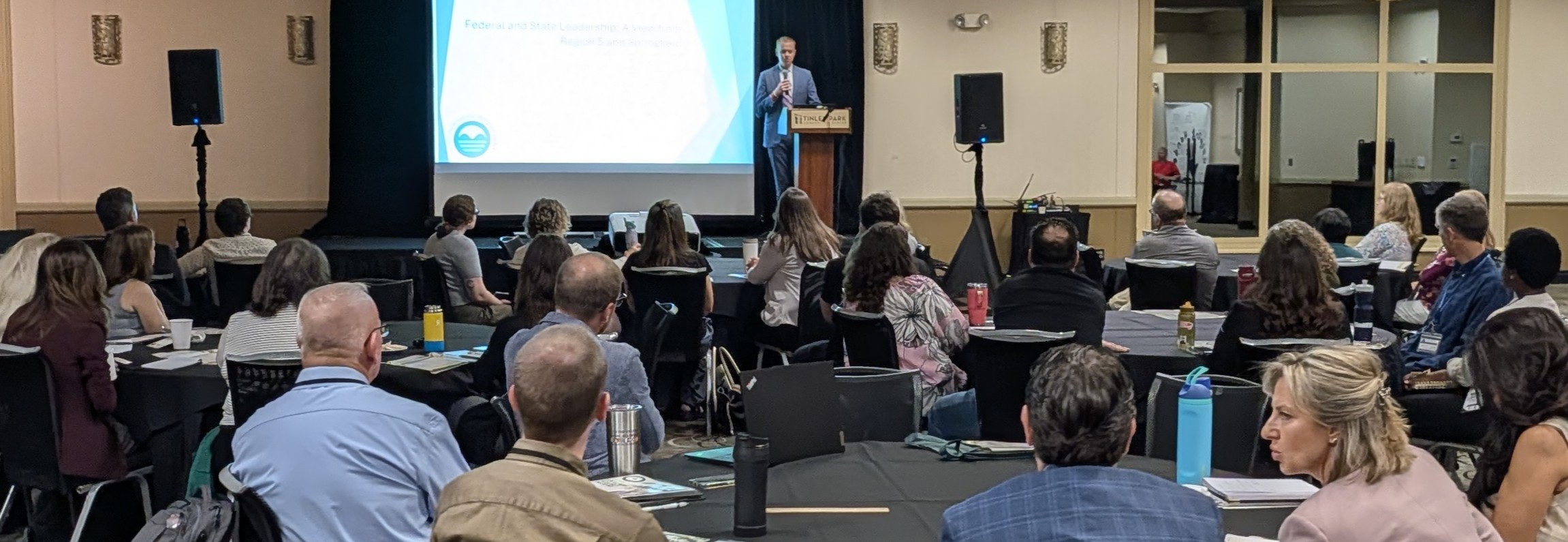
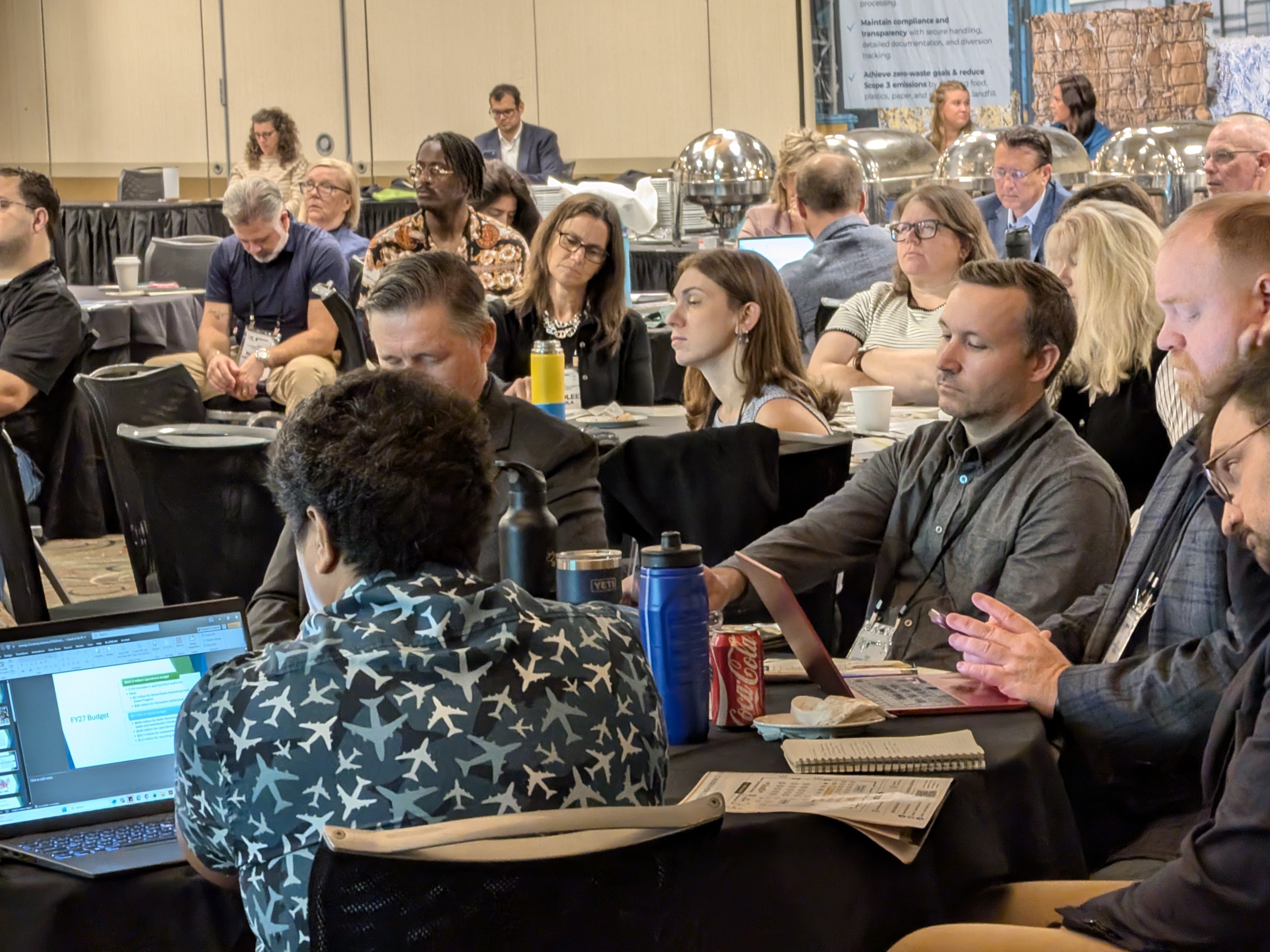
If Vogel pushed the room toward a live national policy debate, Jennings pushed the conversation down into the machinery required to implement environmental policy at all. He put up a national chart showing long-term trends in state environmental agency staffing and funding, a slide with enough red on it to make his reaction understandable. “I hate this slide,” he said.
When Jennings joined Illinois EPA in 2013, the agency had a little more than 1,000 employees; by 2016, he said, staffing had dropped below 600. As of the week before ICC, Illinois EPA was back to 797 employees, including roughly 60 additions this year recruited from universities, graduate programs, other agencies, the federal government and the private sector. Around 60 percent of the current workforce, he said, has arrived within the last five years, and the agency now employs people “who it pains me to know were born in 2005.”
The joke landed because the underlying issue is serious. Institutional knowledge is being rebuilt while Illinois simultaneously asks the agency to administer more complicated programs. An EPR law without administrators is still just statutory text; a grant appropriation without procurement staff is money sitting on paper; a statewide recycling-data system requires somebody to design it, maintain it and understand what comes back.
Jennings described an operating budget of roughly $663.5 million alongside a far larger capital program, much of it associated with water infrastructure. He argued that the financial architecture Illinois has developed over decades for water—bonding, revolving funds and long-duration infrastructure investment—could eventually provide a model for brownfields and materials-management projects rather than forcing circular-economy infrastructure to survive on one-off pilot grants. He also said Illinois EPA and the Department of Natural Resources are discussing how to use $38 million connected to the Monsanto settlement, with Metro East projects likely to figure into those conversations.
Then came perhaps the most quotable announcement of his presentation. Illinois EPA’s long-awaited recycling and composting grant program, expected initially to emphasize composting and food-waste reduction, has been tied up in procurement. Jennings called getting it launched his “institutional white whale” and put a target on the calendar: December 1 for awards, assuming the notice of funding opportunity can move through the remaining process. He joked that even if it turns the rest of his hair gray and leaves him needing stronger readers, Illinois is large enough and has enough financial capacity to get the program off the ground.
The rest of the agency ledger reinforced the same argument. Jennings described record or near-record activity in household hazardous waste, new local options for used-tire collection, long-overdue site-remediation rule updates, electronic permitting and IT modernization, and a push toward earlier compliance intervention in environmental-justice communities rather than waiting for a violation to become entrenched. A room full of recycling coordinators understood exactly what he meant because they live in the distance between authorized, appropriated, procured, awarded and operational.
Illinois is finally measuring the system it may ask producers to fund
The keynote established the political and institutional environment. The next plenary exposed the data problem underneath it. John Carhart of Eunomia Research & Consulting, in a session moderated by Clair Ryan, walked attendees through preliminary findings from the Illinois Statewide Recycling Needs Assessment for packaging and paper products. The fundamental problem is astonishingly basic: Illinois does not have one comprehensive statewide picture of its recycling system.
The state has more than 1,200 municipalities with wildly different structures. Some communities negotiate municipal contracts, while others leave households to subscribe individually. Some have curbside service, some depend on drop-offs, and theoretical “access” does not establish that a household actually participates. Illinois also lacks a centralized statewide reporting structure that can simply tell analysts how much material is generated, collected, processed and marketed.
So Eunomia has had to build the picture from several directions at once: a statewide waste characterization, a facility survey, a hauler survey and an extensive local-government survey. The characterization work included roughly 100 samples across landfills and transfer facilities, while the local survey could run 60 to 80 questions depending on the community’s answers. The response was unusually strong: approximately 435 local governments, with representation from every Illinois county.
The early results begin to explain why the eventual packaging debate will be complicated. About 30 percent of the municipal solid-waste stream falls into the covered packaging-and-paper scope, with fiber dominating that share and plastics representing a smaller but far more troublesome portion. One cost comparison drew attention immediately: municipally contracted recycling averaged about $9 per household per month, while subscription-based service averaged closer to $15. Carhart cautioned against treating that as a perfect apples-to-apples comparison because geography and program design matter, but the logistics of route density are hard to ignore.
The most consequential technical point involved targets. Illinois is modeling what it would take to reach 35, 50 and 65 percent recycling rates by 2035, evaluated by individual material category rather than as one blended statewide rate. Paper and cardboard may already clear the first threshold in preliminary analysis; plastic, glass and metal do not.
Illinois cannot cardboard its way to compliance.
Packaging plastic is performing especially poorly, at roughly 10 percent in the draft figures presented. When an audience member asked whether the failure occurred because products were never recyclable, because households failed to capture them, because MRFs could not separate them or because markets did not want the output, Carhart’s answer was essentially all of the above. Flexible film is a particularly difficult example: it enters the waste stream in huge quantities, creates operating headaches and has extremely limited residential end markets.
The assessment is modeling interventions ranging from collection frequency and universal drop-off access to standardized accepted-material lists, deposit systems, education, compliance spending, mixed-waste sorting and new processing technology. Betsy Ruckman pushed the conversation farther upstream, asking why product design and source reduction were not more prominent among the levers. Then came the obvious EPR question: if Illinois does not have centralized recycling data now, would producer responsibility change that?
The answer exposed one of the least glamorous but most important effects of EPR: targets require measurement, measurement requires reporting, and reporting requires somebody to be legally responsible for providing the data. The final statewide needs-assessment report is due November 1.
Food waste showed what a complete circular system actually requires
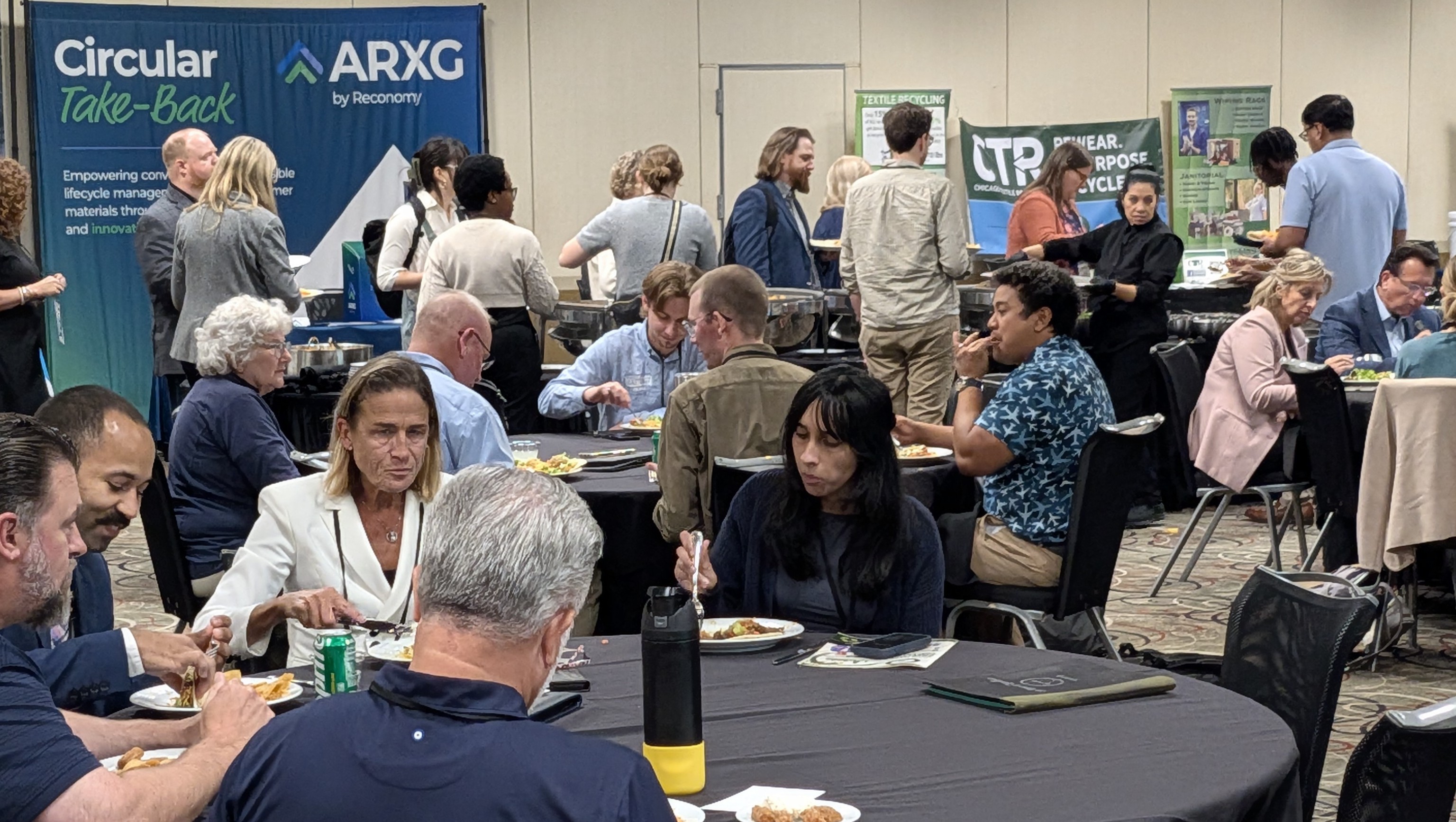
If the needs assessment showed what Illinois does not yet know, the Day One organics session demonstrated what a functioning circular chain actually looks like—and how many things have to go right at once. Moderated by Melanie Mendez, the session placed three very different interventions next to one another. Susannah Sun of Green Era represented industrial processing; Tommy Vaughan of WasteNot represented source-separated collection; and Amy O’Rourke of the Cook County Department of Public Health with Zach Samaras of the Illinois Sustainable Technology Center represented something even farther upstream: stopping food from becoming waste in the first place.
Green Era: 120 million pounds is not a kitchen compost bucket
Sun described Green Era’s South Side Chicago anaerobic digester, where food waste becomes renewable natural gas and digestate that can be used as a soil product. Her most useful explanation of the process was not technical: think of a cow’s stomach or a sourdough starter. The digester is a living microbial system, and during commissioning it cannot simply be overwhelmed with the highest-energy material available. Feed it too aggressively, Sun said, and it can “burp and get upset.”
It took roughly a year and a half to build that biological community. As the digester matured, the biological system became substantially more robust; Sun used a roughly 40-ton load of chicken as an example of the kind of high-energy material a mature digester can handle. The site itself was a contaminated brownfield transferred through a city program for $1, a spectacular-sounding acquisition until roughly $3 million in remediation is added back into the story. Total development was about $35 million, including a substantial philanthropic investment structured through the Greater Auburn Gresham Development Corporation so some future economic value can remain in the community.
Sun told attendees Green Era processed about 120 million pounds of food waste last year, with additional tanks planned that could roughly double capacity. Those volumes are possible because the plant does not require a pristine bucket of vegetable trimmings; a depackaging system can handle grocery, manufacturing and distribution material arriving in plastic, with meat, dairy and liquids still in the load. One memorable example was a truckload of frozen pizza that had gone out of temperature.
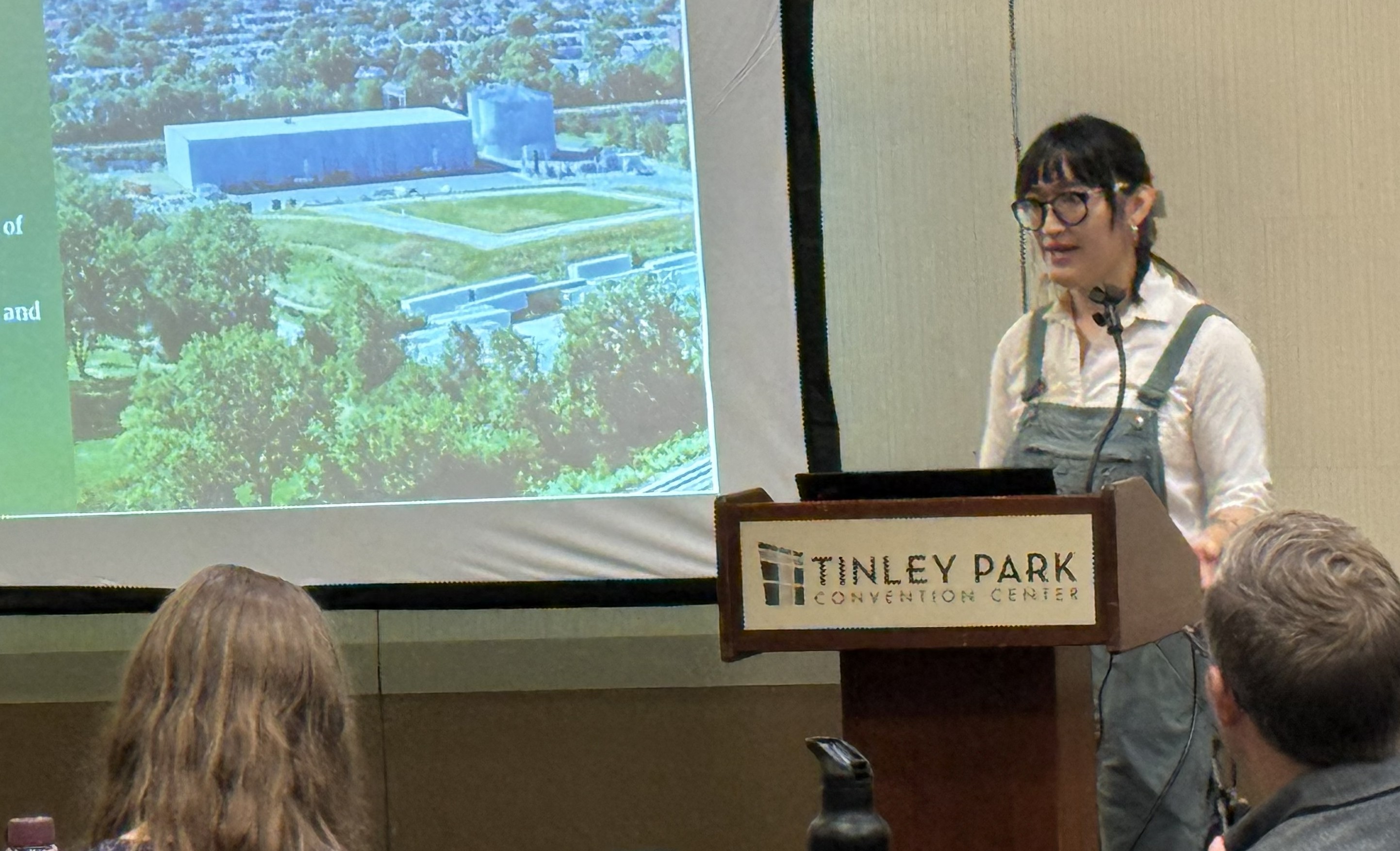
Her best explanation of the scale came from her own apartment. Sun lives in a fourth-floor Chicago walk-up, where friends occasionally give her a hard time when her personal compost bucket has not made it downstairs. That bucket might contain five pounds. She once diverted 26 tons in one day from two Trader Joe’s trucks. Her point was not to mock household composting; it was that a commercial food system generates material at an industrial scale and requires industrial interventions.
Sun made the same argument about food banks, which can themselves receive spoiled or unusable product and get stuck with the disposal cost. Green Era can take those rejected loads, turn them into gas and soil, and feed some of that soil back into urban agriculture. That is the kind of circularity diagram that becomes meaningful because actual organizations occupy every arrow.
WasteNot: Source-Separated Organics Collection in Lake Forest
Tommy Vaughan, Growth & Municipal Manager at WasteNot, focused his presentation on source-separated organics collection and WasteNot’s municipal partnership with the City of Lake Forest. WasteNot specializes in source-separated collection, primarily food scraps and organics, and works with 13 Illinois municipalities through several service models, including public drop-off programs and residential subscription service.
For residential customers, the model centers on a five-gallon bucket. Residents sign up directly with WasteNot, receive instructions on accepted materials and get text and email reminders before collection. On service day, WasteNot weighs the filled bucket and replaces it with a clean, sanitized one. Customers can then view their diversion information through an online portal.
Vaughan emphasized that source-separated collection also gives WasteNot and its municipal partners useful information about participation, collection volumes and contamination. Because curbside buckets are tied to individual customers, WasteNot can communicate directly with a household when contamination occurs. Vaughan said WasteNot sees contamination in about one out of every 100 curbside buckets, while contamination is much more common in open public drop-off carts, where identifying and reaching the source can be difficult.
Lake Forest began the partnership after issuing a non-exclusive franchise RFP in 2023. WasteNot was selected as the city’s promoted organics-collection partner, but residents choose whether to participate and pay WasteNot directly; the city does not fund individual subscriptions through taxes. WasteNot launched the program with press releases, direct mail, digital and physical advertising, community events, referrals, a dedicated signup site and neighborhood outreach.
Vaughan said the program has continued to expand beyond its original residential focus. Local public schools approached WasteNot after students who were composting at home began asking for similar options at school, and WasteNot now serves several schools as well as businesses and other food-waste generators in the area. WasteNot has also held finished-compost giveaways and presentations for community groups as part of its outreach.
As of the conference, Vaughan reported that the Lake Forest program had composted more than 400,000 pounds of material, with a little less than half coming from residences. WasteNot and the City of Lake Forest signed a five-year extension of their agreement in January, and the company continues to enroll residents and engage businesses and community organizations.
Sometimes circularity means noticing 100 pounds of bananas
Cook County and ISTC moved the discussion even farther upstream. O’Rourke described the county’s Good Food Purchasing Program, which applies to major public institutions including hospitals, the Juvenile Temporary Detention Center and the county jail. The important part, she said, is not the resolution announcing a purchasing philosophy; it is putting requirements into contracts and solicitations so food-service companies actually have to find the products and practices public policy is asking for.
Samaras handled the food-waste audits. At hospitals, his team separated and weighed back-of-house preparation waste, cafeteria material and patient-tray returns. At the detention center, the work became more operational: measure what the kitchen prepared, what was served and what returned. The numbers made mundane decisions visible.
In one hospital sample, researchers found more than 100 pounds of bananas with no established pathway into a later meal or donation. At the detention center, individually counted foods—two pancakes, two sausages, two country-fried steaks—produced substantially less waste than foods delivered in large tubs, which could contain essentially the same amount whether six people or fifteen were eating. Information gaps created waste too: the hospital knew its occupancy, but the kitchen did not necessarily have the same real-time information, so meals could be prepared for patients who were not there.
Those findings make the waste hierarchy feel less theoretical. Sometimes the circular intervention is a compost cart, but sometimes it is a contract clause, a forecasting system, a smaller serving vessel or simply asking why 100 pounds of bananas are sitting in the waste audit. The best prevention project may not produce a dramatic photograph because it prevents the photograph from existing.
The resident is part of the infrastructure
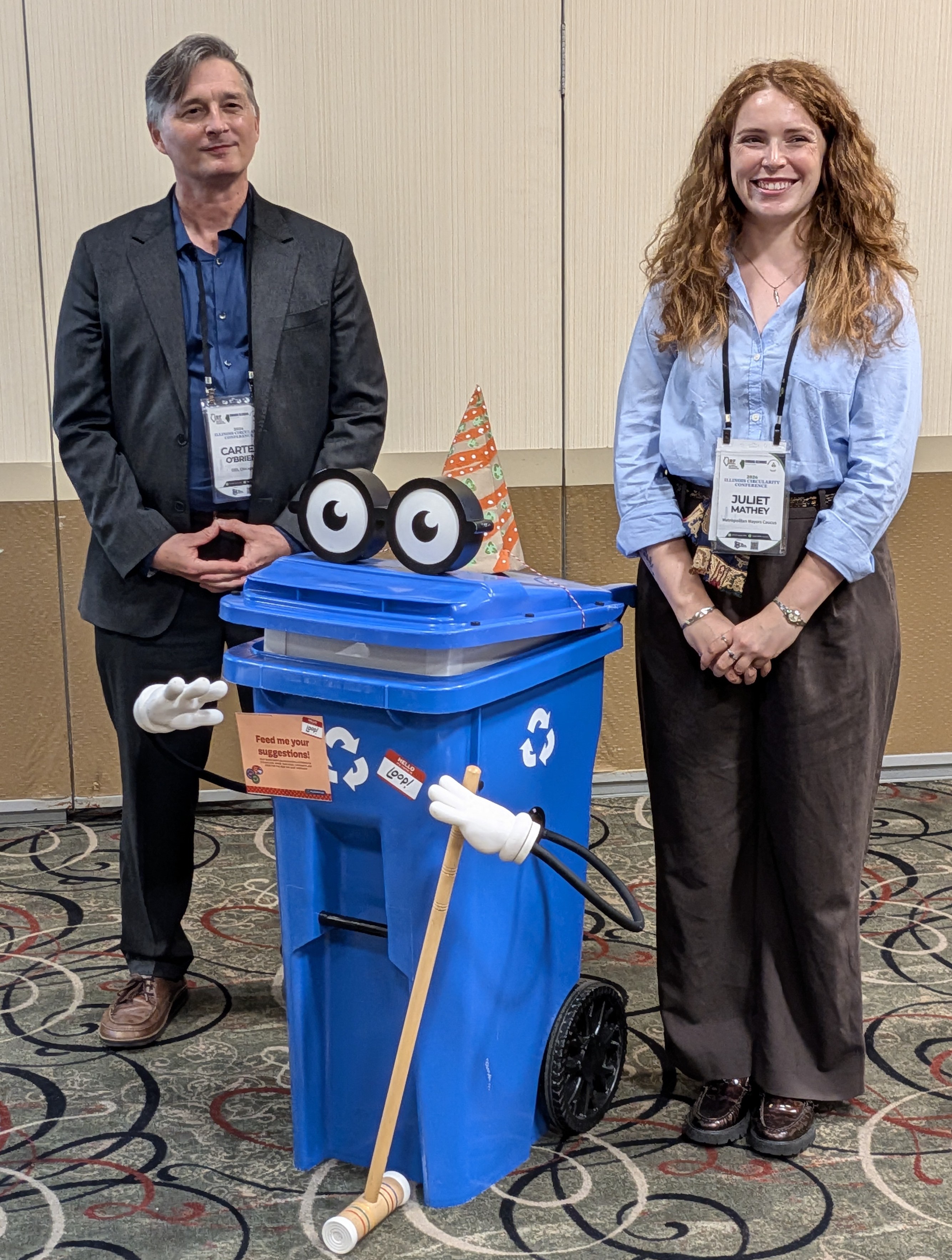
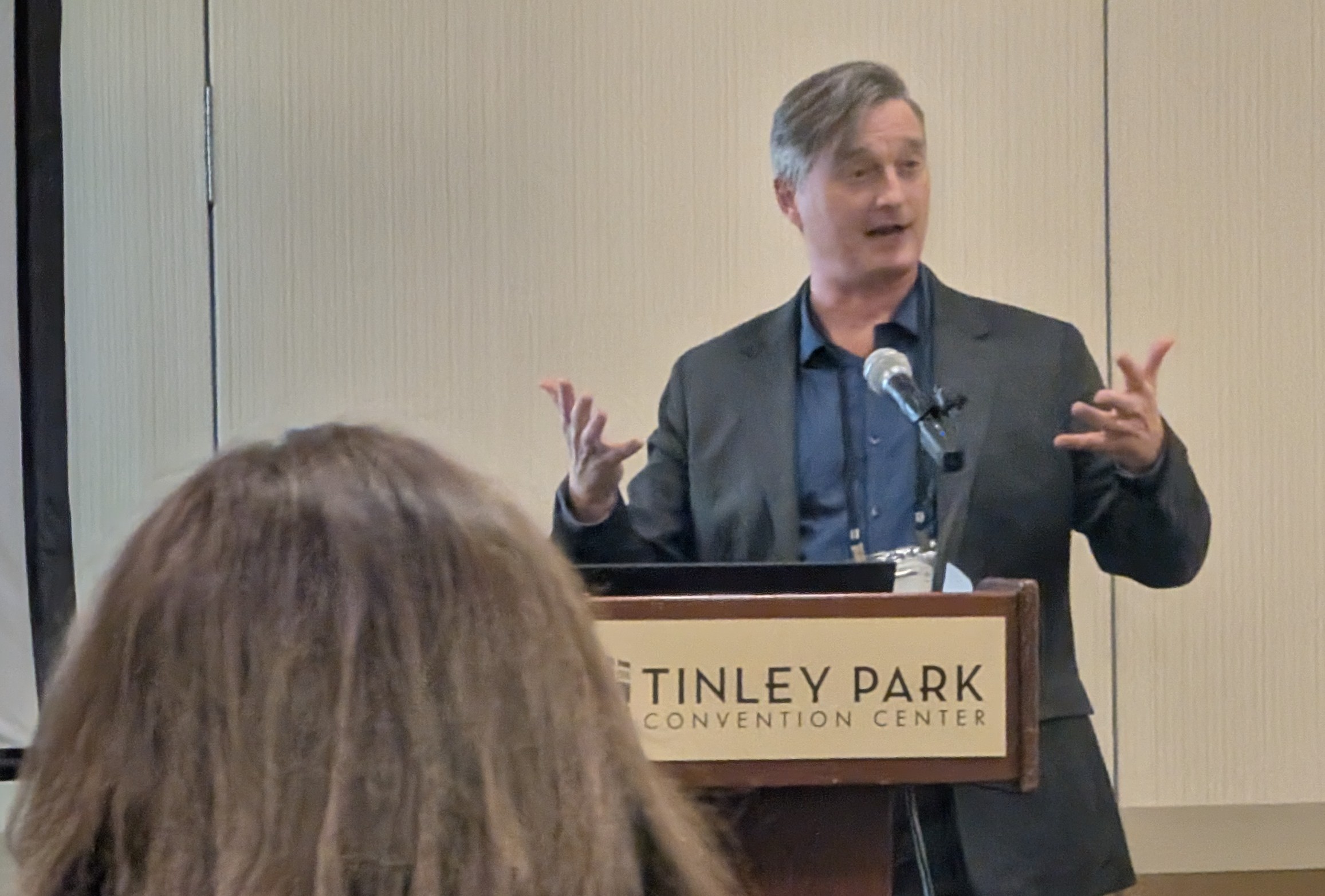
The afternoon session “Engaging Residents for Better Participation,” moderated by Christina Seibert, paired Juliet Mathey’s Feed the Cart campaign with Carter O’Brien’s rollout of Recycle Coach in Chicago. Both presentations began from the same premise: the most technically sophisticated recycling program can still fail if the resident does not understand what the system is asking them to do.
Feed the Cart is a regional education campaign with goals that include increasing recycling tonnage and cutting contamination, but its most interesting choice is tonal. Mathey said residents have heard for years that recycling is fake, that everything goes to landfill or that the rules make no sense. A program built primarily around scolding residents for doing it wrong risks reinforcing exactly that distrust.
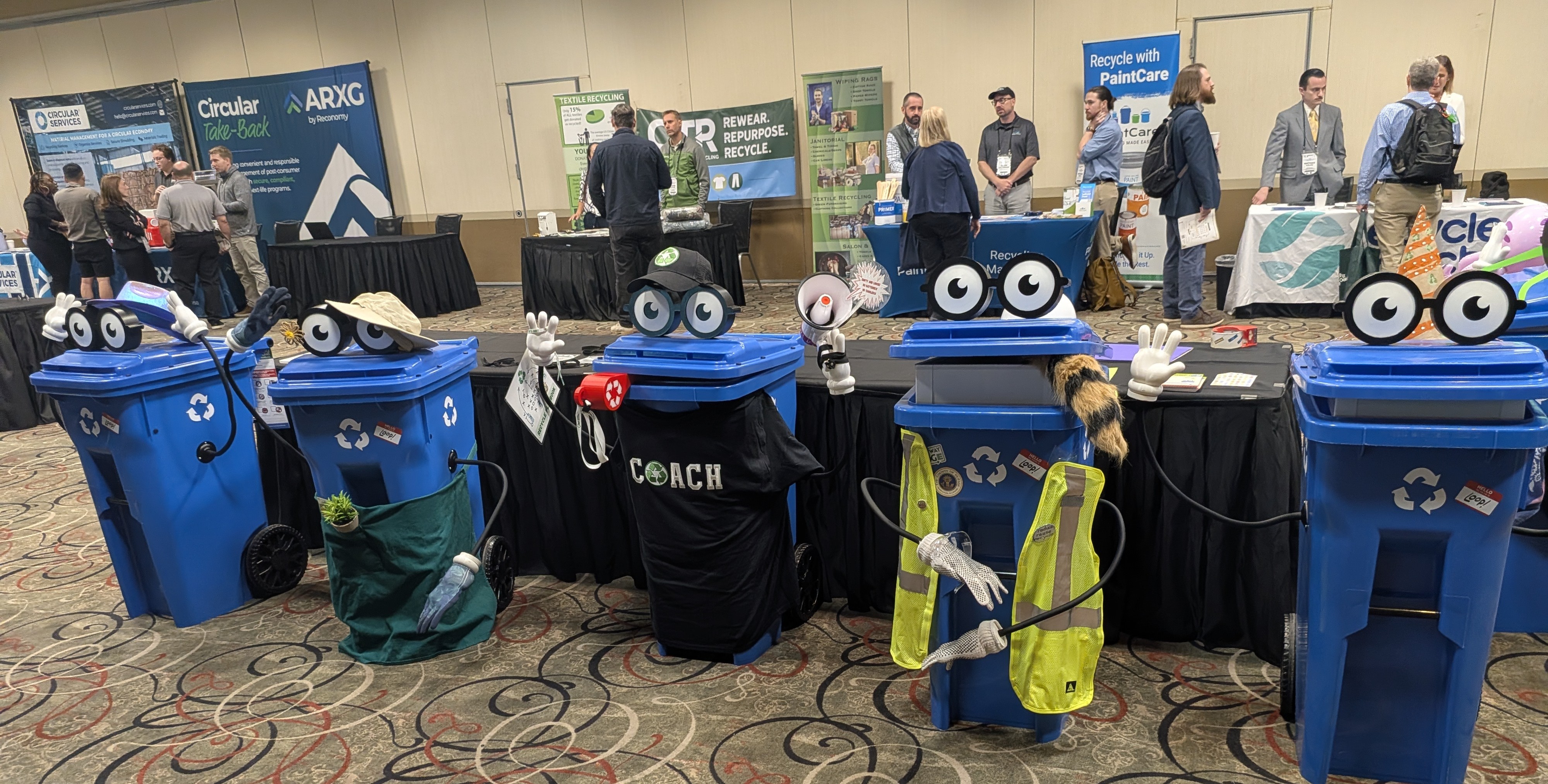
So the campaign uses Loop, a recycling-cart mascot, to emphasize what residents can do and to create something recognizable across community boundaries. The campaign has reached roughly 2.6 million people through paid advertising, attracted about 67,000 website users and generated substantial media attention. Regional partners have adapted the material into local guides and additional languages, while cart-tagging programs have produced harder behavioral data: in Waukegan, contamination among inspected carts fell from roughly 60 percent in week one to about 25 percent by week four.
Then Mathey described the measurement no dashboard will ever capture. At an event in Palos Hills, a little girl saw the mascot and shouted, “Oh my God, it’s Loop,” even though Mathey had barely worked in that community. Nobody runs across a parking lot because they recognize a municipal PDF. The unresolved question is what happens when the grant supporting the campaign ends; artwork can survive, but a communications system still needs somebody maintaining information and handing residents back to the correct local agency.
Chicago learned that recycling is also an information system
O’Brien followed with the operational version of the same problem at Chicago scale. The blue-cart program serves approximately 625,000 one-to-four-unit households, which means an incorrect schedule or bad instruction is not a small error. The Recycle Coach rollout involved cybersecurity, city firewalls, hundreds of material entries, reuse options, translation into the language residents actually use and the complex geography of who gets collected by whom.
Then there was the calendar. Chicago’s sanitation and recycling schedules combine into 82 collection zones, and holidays can cause city crews to pull service forward while private contractors follow a different pattern. That can lead to an exchange O’Brien has clearly lived more than once: “You missed me.” “No, we came a day early.” “Why did you come a day early?” The solution was almost absurdly simple: flag every day in a holiday week as a possible service-change day in the digital system. Complaints dropped.
Launch brought roughly 500 subscribers overnight, then the easy growth ended and the grinding work began: palm cards, bilingual flyers, ward offices, block captains, transit ads and cleanup of old webpages that kept pointing residents toward the previous tool. Digital information at least gives staff something paper cannot: reversibility. Chicago’s annual mailer is one enormous, budgeted shot, and “once they are gone, they are gone,” O’Brien said.
“People are not shy in Chicago about calling us to tell us we have something wrong,” he said. But a digital error can be corrected in “literally 30 to 90 seconds,” something he described as an “absolute delight of stress reduction.” Search data now tell the city what residents are confused about before someone decides to launch another generic education campaign. The most searched material was household batteries, which brings the story back to Loren Williams’ backpack.
Batteries showed why collection is only the front half
The Battery Network breakout was officially titled “What Really Happens to Batteries After Collection?” Williams, filling in as moderator, had already provided the perfect opening. Illinois’ portable-battery EPR program took effect January 1, 2026, with producers financing collection and recycling rather than depending on an annual appropriation. More than 350 producers now fund the program, and public access expanded quickly from roughly 86 percent population coverage initially to 93.3 percent in April and 97.5 percent by July.
The collection infrastructure itself is deliberately ordinary. A library or city hall can use a box; a public works operation may use a drum with fire-suppressant material; damaged batteries have their own handling system. Retail sites expand the network further. The goal is a system so accessible that residents do not need specialized knowledge just to participate, but accessibility is the beginning of the story rather than the end.
A thumbtack, a lithium cell and less than one sentence
At one point the presenters showed a video of a lithium battery being punctured with a thumbtack. The response was nearly instantaneous. “How fast did that go up in flames?” the presenter asked. “I finished one sentence before you saw the flames.” From there the discussion became intensely practical: lithium and button-cell terminals need protection, alkaline batteries require different handling, and heat or odor can indicate damage.
The presenters also offered one of the stranger statistics of the conference: roughly one in 18,000 collection boxes experiences a fire, usually in transit. That, one presenter joked, makes it UPS’s or FedEx’s problem instead of yours—unless the batteries were packaged incorrectly at your end, in which case the joke stops being very funny.
Illinois can collect a battery without being able to process it in Illinois
Stephanie Weeks pushed the conversation downstream. Battery sorting remains surprisingly manual because chemistry determines processing and automated identification still has limitations. Then consider a power-tool battery pack: mixed plastic in the housing, wires, circuitry, steel, aluminum, copper and the cells themselves. “You’re looking at half a dozen waste streams for one battery,” Weeks said.
The recovered materials do not necessarily return to new batteries. Some metals move into steel, stainless steel, road aggregate, roofing materials, fertilizer or other applications. Illinois-collected batteries may travel out of state for sorting, including to Georgia, while Weeks identified a larger national constraint: the United States needs more processors, particularly for lithium-ion material.
The problem becomes more obvious when looking ahead. If sodium-ion becomes common, the existing collection network can create another bucket for it; that does not create a sodium-ion processor. Solid-state lithium raises the same question. One audience member asked the logical Illinois economic-development question: if the state is going to generate large volumes, should Illinois be trying to attract the processing capacity too?
Collection is not circularity. Collection is the front half.
If the recovered material cannot economically reach a processor and then a real market, the loop is still open.
Embedded batteries create the next problem before the first is solved
Illinois’ law also leaves unresolved questions around products whose batteries are difficult or unsafe to remove. An embedded-battery study is looking at roughly 30,000 potentially relevant products, with findings expected in 2027. Vapes illustrate the difficulty particularly well because they combine lithium batteries, electronics, plastic and—in nicotine products—additional hazardous-waste complications.
During the later producer-responsibility plenary, attendees learned that an Illinois vape bill had been pushed in part by high school students in the Pontiac area, working with a teacher before the idea gained additional support from environmental and product-stewardship organizations. Schools confiscate disposable vapes and then discover they have become involuntary collection sites for difficult lithium-containing devices. Teenagers pushing hazardous-waste policy because their schools cannot figure out what to do with confiscated vapes may be one of the most 2026 stories imaginable.
Battery education has another problem: Illinois eventually has to unteach something residents were deliberately taught. Covered single-use batteries will no longer belong in ordinary trash beginning January 1, 2028, yet households spent years hearing that modern alkaline batteries could safely go there. The assignment is to reverse a long-standing disposal habit without leaning entirely on either punishment or fear.
Producer responsibility moved from theory into implementation
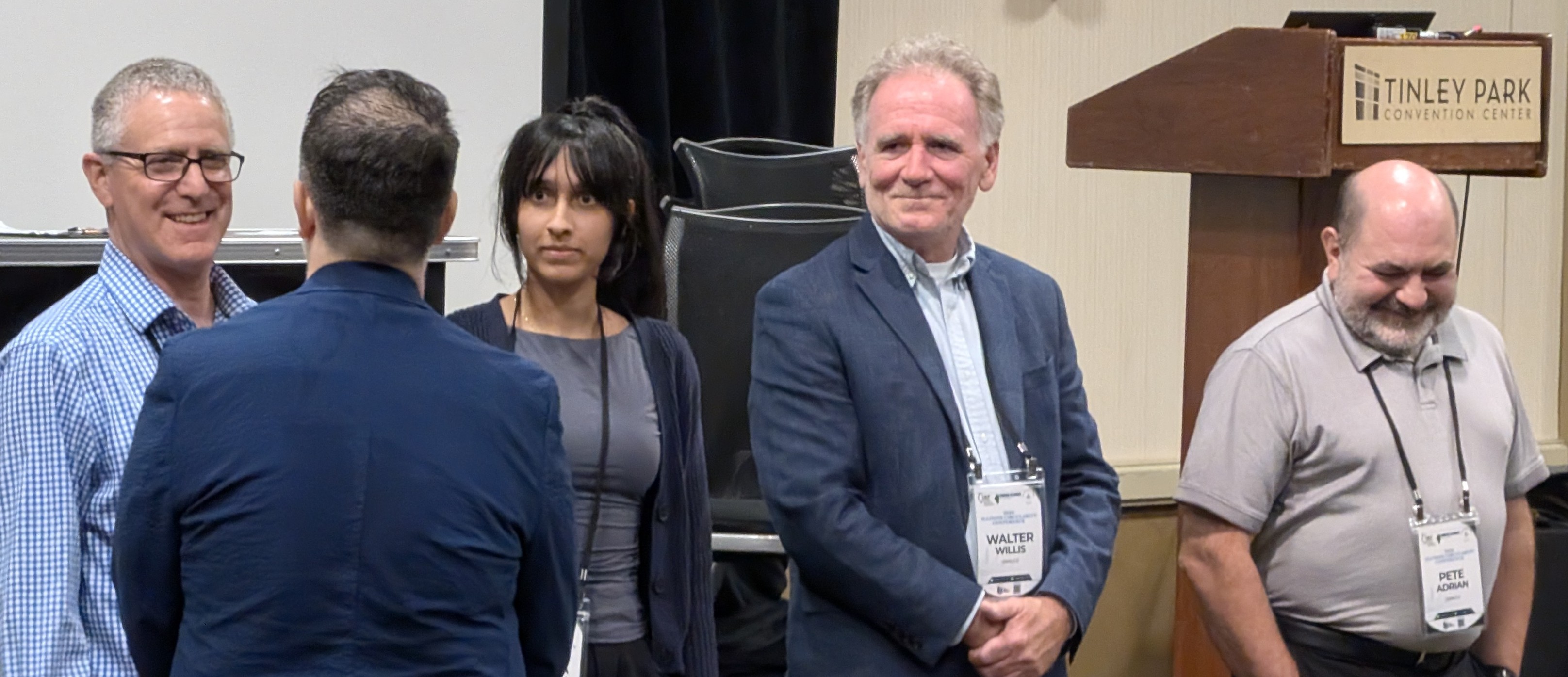
Day One concluded with “Producer Responsibility Comes to Illinois: Batteries, Electronics, Packaging, and What Comes Next,” moderated by Walter Willis. Before discussing statutes, targets and fee structures, the panel started with an icebreaker: what is something you want to do before you become too old to do it? Roxane Peggs said her Italian grandfather was turning 102 that very day, and that she wanted to travel to Italy and walk the path her grandfather and family had walked. Someone on the panel responded, “You’re going to make me cry up here.”
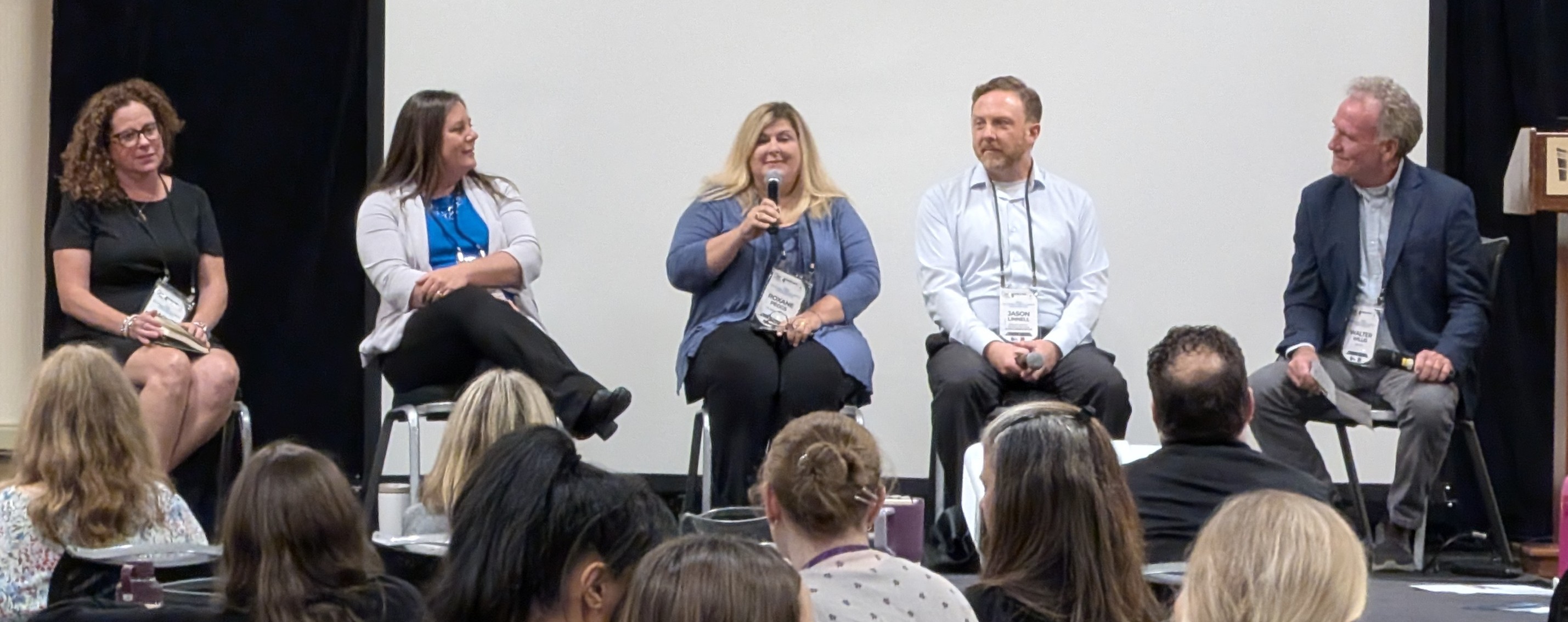
Then they went back to EPR. Jason Linnell of the National Center for Electronics Recycling walked through changes arriving in Illinois’ electronics program in 2027. Covered products expand to include home audio and additional peripherals, access broadens for people bringing small numbers of devices, event requirements change and the clearinghouse is developing a new public-facing information system. The important lesson was that even a relatively mature EPR law has to return to the shop when implementation reveals problems nobody fully anticipated at passage.
The Battery Network then delivered what may have been the most candid program self-assessment of the conference. Against an annual target of roughly 950,000 pounds, the Illinois program was at a little over 320,000 pounds, including only about 89,000 pounds of primary batteries, lower than expected at this stage of implementation.
Two explanations followed. First, the organization rebranded in January in the middle of launching Illinois, pushing marketing later than was useful. Second, it modeled early Illinois behavior partly on Vermont and Washington, D.C., where residents initially emptied years of hoarded batteries into new collection systems. That flood did not occur here, likely because Illinois counties and agencies had already been collecting rechargeable and other batteries for years.
That is a useful implementation lesson far beyond batteries: you cannot import behavioral assumptions from another state and assume Illinois will behave the same way. Rural access remains difficult too. Permanent sites had been secured in all but 17 counties, and nobody pretended that a collection event once every few years provides the same convenience as a permanent location.
What local government gives up
Christina Seibert then said something about EPR that is rarely stated so plainly. Local governments spend years building programs. They know their residents, vendors, sites and collection habits. Producer responsibility changes who controls the money, who contracts, who makes decisions and who ultimately owns responsibility for the system.
“As a local government running programs, you want to have the control and the authority to say we want to do it this way, and this is the way that has worked before,” she said. “Producer responsibility means we have to take a step back from that.” That step may ultimately be beneficial if producers pay and systems improve, but it is still a real transfer of authority, and the phrase producer pays does not capture all of it.
Seibert also laid out the policy pipeline: household hazardous waste, vapes and packaging. Packaging EPR returned to the conversation repeatedly because Illinois’ earlier inability to build consensus around a packaging bill is precisely what produced the current needs assessment. An audience question opened the door to eco-modulation—using EPR fee schedules to reward recyclability, recoverability, source reduction or removal of problematic chemicals.
Illinois EPA staff brought the conversation back to implementation: Is the scope narrow enough? Is the agency’s role defined? Does the authority exist? Can the program actually be administered? Good intentions are not an implementation plan.
Beyond the bin: sometimes recycling is not the best answer
Several afternoon presentations pushed the conference toward an even more fundamental question: What if recycling is not actually the first thing we should optimize? Aleksandra Plewa of EcoShip asked attendees to picture an ordinary shipping box. A product arrives, the customer opens it, flattens the cardboard and places it in recycling. That is a responsible outcome—but perhaps not the best one if the box could survive 20 or 50 more trips.
EcoShip has built a reuse operation around exactly that gap. Residents and organizations bring clean packaging into a roughly 3,000-square-foot retail space, volunteers inspect it immediately, sort it and make it available to businesses and individuals for a fraction of the cost of new packaging. In the six-month period Plewa presented, EcoShip collected about 46,000 gallons of packaging, including more than 8,000 boxes, and served more than 900 paying customers.
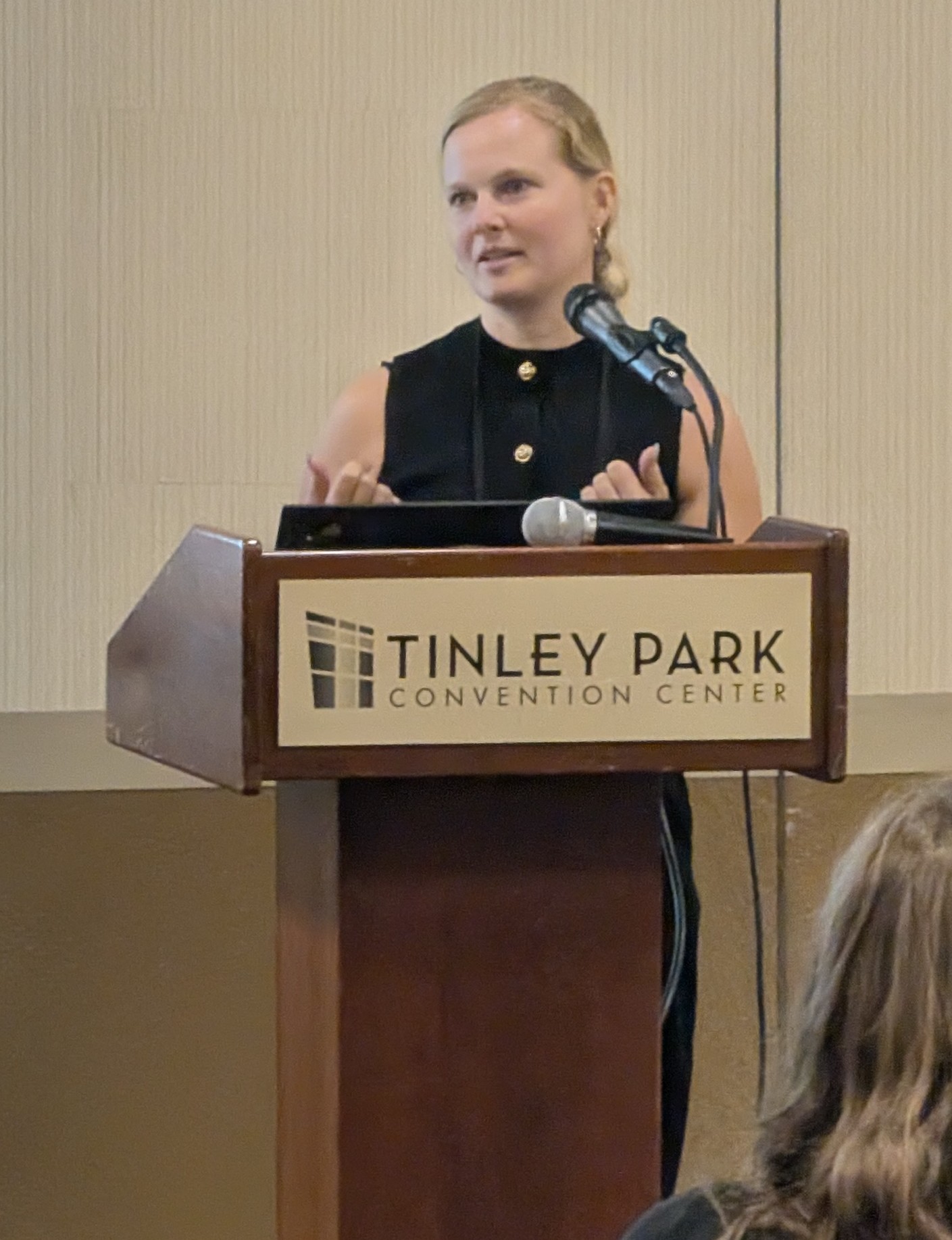
One unintended outcome was even more interesting. Some frequent donors started coming less often because storing their packaging until the next EcoShip trip forced them to see how much they were buying online. The pile in the closet became a consumption record, and some reduced their purchasing. Reuse created awareness, and awareness produced source reduction.
Safer foodware sometimes costs less
Cassie Carroll of the Illinois Green Business Program presented another example of environmental performance getting easier when the economics cooperate. Her project evaluated packaging purchases at 31 Chicagoland food businesses, identified PFAS-free and compostable alternatives, tested products and removed as many barriers to switching as possible.
The assumption is that safer foodware costs more. Sometimes it did, but for roughly 45 percent of participating businesses, the project identified alternatives that actually reduced cost, averaging around 13 cents per unit among that group. Carroll reported that Chi Soul Food and Vegan Cuisine, already using PFAS-free products, saved about $326 a month after being connected with better local suppliers.
Eight of the 31 businesses ultimately switched permanently, representing roughly 34,000 products a year moved away from plastic, polystyrene or PFAS-coated stock. The more revealing result was how those businesses were recruited: five of the eight came from a single email distributed by a community organization the owners already trusted, while cold outreach produced little even when free samples and money were available.
That is not merely a foodware finding. It is a communications finding. Trust is infrastructure too.
A ton of paper is not simply a ton of paper
George Ward Jr. of Midwest Paper Retriever challenged another comfortable assumption: recovered tons are not interchangeable. His family business grew from three trucks in the 1970s into a multistate paper-recovery operation, while the material stream it was built around changed underneath it. Printing and writing grades declined for years, COVID accelerated the loss of office paper, and single-stream curbside captured material that once moved through dedicated paper systems.
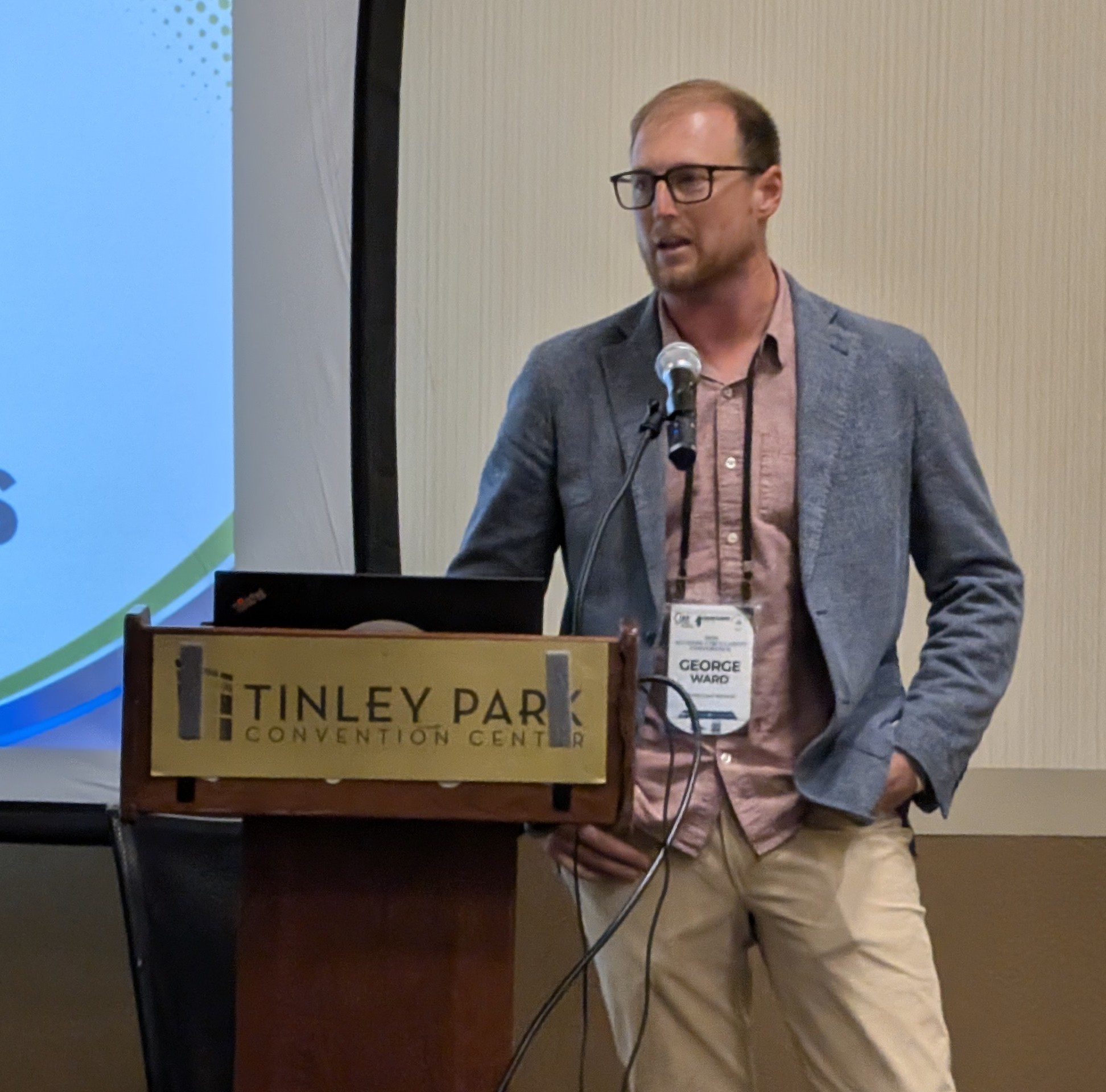
Ward was careful not to call single-stream recycling a mistake. It is convenient, captures material and works at enormous scale. But large MRFs produce mixed paper grades suited to certain mills, while cleaner separated fiber can feed higher-value products. His response is strikingly old-fashioned: measure material more precisely, educate generators again and consider paying rebates for clean fiber.
He also noted a physical constraint no statewide policy model is likely to predict: Paper Retriever stopped operating inside Chicago city limits because its front-load truck wheelbase does not work well in Chicago alleys. Sometimes market design runs into the dimensions of a truck.
At The Plant, the recycling dumpster is almost the last resort
Carolee Kokola of Bubbly Dynamics offered perhaps the conference’s most complete reuse philosophy, largely without slides because the presentation file refused to cooperate. “All right—who hates me here?” she joked at the technology. Then she talked anyway.
Bubbly Dynamics redevelops old industrial property for small businesses, including The Plant, a former meatpacking facility now filled with food and manufacturing operations. A former tenant, Rumi Spice, left behind a line Kokola adopted: “Where there’s ruin, there’s hope for treasure.”
That is essentially the operating model. The Plant treats commingled recycling as nearly the second-to-last option, trying first to find higher-value pathways for cardboard, metal, paper, burlap, packaging, food scraps, rainwater and useful household or commercial items. A lobby box circulates packaging among tenants; a “freebie island” gives miscellaneous objects another chance; metal moves to a nearby scrap dealer; vegetative material becomes compost; sturdy delivery boxes return to vendors for another trip.
Kokola’s cautionary tale was even more useful. Bubbly Dynamics once secured funding for an anaerobic digester. The technology itself was proven and commonplace enough elsewhere, but local contractors did not have equivalent experience. Bids came back four to six times higher than expected, pushing a roughly $4 million project beyond what the organization could absorb. The equipment remains mothballed.
The problem was not invention; it was ecosystem. Contractors have to know how to install something, regulators how to permit it, lenders how to finance it, suppliers how to support it and markets how to use what comes out. Infrastructure does not become real merely because a machine exists in a catalog.
And then the suits came off
By Wednesday evening, attendees had spent a full workday on recycling targets, food waste, PFAS, lithium-ion fires, procurement, EPR, contamination, market quality and environmental policy. The program wisely stopped trying to teach them things for a few hours. Happy hour led into dinner, and Bill Martin took over with close-up magic and mentalism, changing the rhythm completely as people who had spent the afternoon debating eco-modulation started arguing instead about how a trick had worked.
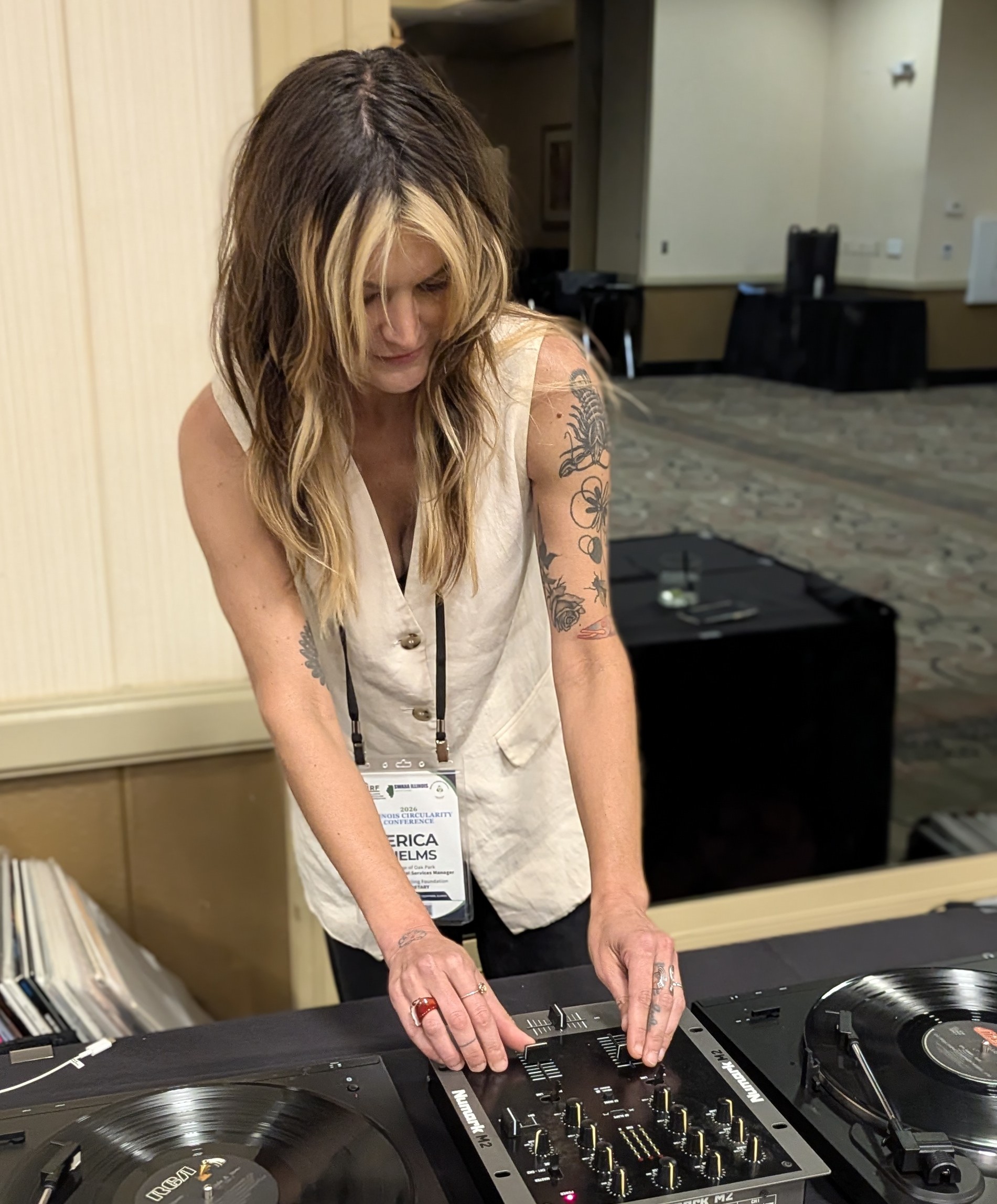
Then DJ Erica took over on vinyl—actual records—and she was, by the only evaluation metric that mattered at that point, da bomb. The evening was not disconnected from the work. Conferences produce relationships in places that do not appear on agendas: at exhibitor booths, over dinner, during hallway conversations and occasionally on a dance floor. A county coordinator meets the person who already solved the problem they have been fighting for three years; a processor meets a generator; a community discovers somebody else already built the program it was preparing to invent from scratch.
Day Two: what if the thrift store is already circular infrastructure?
If Day One repeatedly demonstrated that collection is only the front half of circularity, Thursday morning added a useful complication: sometimes the infrastructure is already there. We simply do not call it infrastructure.
The Day Two Salon A session, “Specialty Recycling, Reuse & Community Diversion,” brought together Nathan Montgomery of Salt & Light, Betsy Ruckman, now with University of Illinois Facilities & Services after previously working at the Illinois Sustainable Technology Center, and Mary Novak of the Chicago Furniture Bank. Loren Williams of PCs for People moderated. What looked on the agenda like a session about thrift stores and furniture diversion became a larger discussion about what happens when organizations built primarily to fight poverty become de facto collection sites for textiles, electronics, books, mattresses, furniture and nearly everything else households no longer want.
For Salt & Light, the conversation began with a number that tends to focus attention quickly: $10,000 a month. That was the organization’s trash bill when it called ISTC for help. Ruckman said the technical-assistance program responded to “any cry for help, Superman style.” Salt & Light had cried loudly.
The organization began in Champaign-Urbana in 2004 as a traditional food pantry and clothing closet. By 2014, Montgomery said, its leadership had become dissatisfied with a one-way charitable model that moved products to people without necessarily changing the conditions creating generational poverty. Salt & Light rebuilt itself around grocery and thrift stores where participants can volunteer, earn store credit based on minimum wage and use it to shop, while other programming addresses employment, financial education, job skills and community support.
Circularity was not the original mission. Volume made it one.
A thrift store receiving 350 vehicles a day is a materials facility
Salt & Light now receives approximately 350 donating vehicles a day at its two locations, sometimes including box trucks. Roughly 1,200 to 1,500 pieces of clothing can move to the sales floor daily, while unsold but recoverable textiles go into salvage. That textile stream alone is enormous: Montgomery said Salt & Light sends roughly 120,000 to 130,000 pounds of textiles each month into recycling or salvage markets, enough for a semitrailer every seven to 10 days.
The organization currently works through a broker, but Montgomery said the conference had already made him wonder whether Salt & Light could capture more of the chain itself—baling, processing or otherwise reducing transportation while creating additional vocational work. Textiles are relatively easy because the outlet exists. Books are harder, especially outdated textbooks in a university town. Glass and ceramics offer potential recycling technologies but require capital, floor space and a plausible return, while electronics require equipment, work space and employees or volunteers with the skill to determine whether the donated item is a product or a liability.
That led Ruckman to one of the most interesting Day Two policy ideas: what if the thrift store is already functioning as a CHaRM center? A Center for Hard to Recycle Materials exists because households accumulate things that do not belong in a curbside cart but are too valuable or complicated to simply landfill. Yet many communities already have thrift stores where residents routinely bring exactly those things. They know where the building is, they already make the trip and they often trust the organization more than they trust an unfamiliar specialty collection program.
Ruckman floated the possibility that thrift operations could become more intentionally connected to electronics collection or other statewide programs. Salt & Light is already receiving electronics, including obviously dead equipment a donor may insist “works.” Instead of treating that as a donation mistake, could Illinois recognize an appropriately equipped thrift organization as part of the formal recovery infrastructure?
“This is more of a question than an answer,” Ruckman said. It is a good question.
The donation dock is where good intentions meet the waste stream
The discussion then moved into something recycling policy rarely addresses: the psychology of donation. A thrift store has to say no, and that gets complicated when the donor believes dropping something off is inherently charitable. Ruckman described a mindset familiar to anyone who has managed donations: someone with nothing would be glad to have this. An object may be broken, badly outdated or something the donor would never give to a friend or family member, yet because the imagined recipient has fewer resources, the donor assumes it should still be welcomed.
Then there is the nostalgia problem: But it was Grandma’s. Emotional value to one family does not automatically create a secondhand market for a 40-year-old toaster. Montgomery said the organization spends real effort training donation-dock staff to reject unusable goods without alienating the donor. Those employees may have been outside for hours moving furniture in the heat, yet one bad interaction can determine whether a donor ever returns.
The financial consequences are real. Salt & Light is recycling more than ever, Montgomery said, but total trash tonnage still climbed from a little over 420 tons in 2022 to nearly 700 tons in 2025 because overall donation volume is growing even faster. More diversion does not necessarily mean less waste if the incoming stream is expanding faster than every outlet the organization can build.
Ruckman pushed the textile discussion one step farther upstream. Fast fashion is not merely a downstream recycling problem; it is a production and consumption problem. She pointed to an earlier era when organizations such as Goodwill employed people to mend garments because clothing retained enough value to justify repair, then asked whether those repair skills could become vocational programming again.
That brought the speakers to kintsugi, the Japanese practice of repairing broken pottery in a way that highlights rather than conceals the repair. Montgomery connected the metaphor directly to Salt & Light’s work with poverty and dignity: restoration can make something not merely usable again but more meaningful because of what it survived. Ruckman extended the image back to the material system—if thrift stores are places where both people and products are given another chance, perhaps public policy should stop treating them as incidental charities and start treating them as reuse infrastructure.
Chicago Furniture Bank: do not recycle the couch if somebody needs a couch
Mary Novak then made the same argument at furniture scale. Chicago Furniture Bank began in 2018 after three University of Pennsylvania graduates returned to Chicago with a business-plan concept modeled on a furniture bank where they had volunteered in Philadelphia. Their original goal was to furnish 300 households a year. Eight years later, Novak said, the organization has served more than 25,000 households, representing roughly 62,000 people, including about 16,000 children who no longer have to sleep on the floor.
Furniture poverty, Novak argued, is not simply about furniture. A bed affects sleep and health. A table changes where a family eats. A couch provides somewhere to sit with another person. An empty apartment can preserve instability and isolation even after a family has technically secured housing.
Those human needs collide with an enormous waste stream. Mattresses, couches, tables, lamps and other bulky goods are expensive to transport and difficult to landfill, while many retain useful life. The Furniture Bank intercepts that material and puts it back into homes. The scale looks less like a small charity operation than reverse logistics.
Novak said the organization performs roughly 42 to 60 residential pickups each day and works with universities, retailers, movers, real-estate businesses and other institutional partners. In 2025 alone, 712 semitrailers of furniture arrived at the Furniture Bank. One Loyola renovation produced more than 145 couches, while NYU sent 44 straight trucks of furniture.
Large institutional projects can also produce thousands of nearly identical dorm desks, and a family does not necessarily need a dorm desk. So warehouse manager Carlos and the team started turning desks into dressers, at a rate of roughly 15 a day. Project H.O.O.D. participants then paint some of them in different colors and designs, and children visiting the Furniture Bank can choose something that looks as if it belongs in their room. That is not recycling, and it is more than simple reuse; it is actual repurposing.
The warehouse has a parts inventory nobody ordered
The Q&A made the repair philosophy even more concrete. Sleeper sofas may be useful but are extraordinarily heavy for families living in walk-up apartments, so staff can remove the sleeper mechanism, send the metal into recycling, reinforce the bottom and turn the piece into an ordinary couch. Glass tables can become wood tables using material salvaged from another item, and hotel lamps that arrive with damaged shades can be rebuilt from an entire wall of usable spare lampshades.
Furniture that truly cannot be saved may still surrender legs, hardware or other pieces into a parts inventory. A chair arrives with three legs? Replace the full set from salvaged stock and return the chair to the showroom. “We figure it out,” Novak said.
Mattresses follow the same hierarchy. If one can be safely disinfected and reused, keep it functioning as a mattress. If it cannot, a recycling partner can dismantle it and recover the internal materials, sometimes supplying new mattresses back into the Furniture Bank’s system. First keep the product functioning as the product, then repair it, then repurpose it, then recover the material, and landfill what genuinely has no pathway left. That is the waste hierarchy practiced by warehouse staff instead of presented as a pyramid on a slide.
Chicago Furniture Bank’s social enterprise, Honest Junk, extends the idea into cleanouts and decommissions, recovering usable material from what might otherwise become an undifferentiated disposal job. Novak said Honest Junk repurposed more than 49,000 pieces of furniture last year, while the broader organization has returned more than 350,000 pieces to use over its life. The organization now employs 55 people and drew nearly 7,000 volunteers in 2025, with more than 400 nonprofit partners referring clients.
Novak kept returning to one word: dignity. A family is not simply receiving someone else’s unwanted couch. They are choosing a couch, matching it with a table, finding a lamp and artwork, and turning a living space into their home. Reuse works because the next owner still sees value in the object; circularity cannot be built on the premise that people with fewer resources should be grateful for whatever everyone else rejected.
In the Q&A, Novak also explained that the Furniture Bank’s normal pickup radius is around 40 to 50 miles, though the organization will travel farther when the donation makes sense. Its acceptance philosophy is broad: “We will take everything except livestock,” she said. Then she admitted she had previously re-homed a goat, so even that rule has an asterisk.
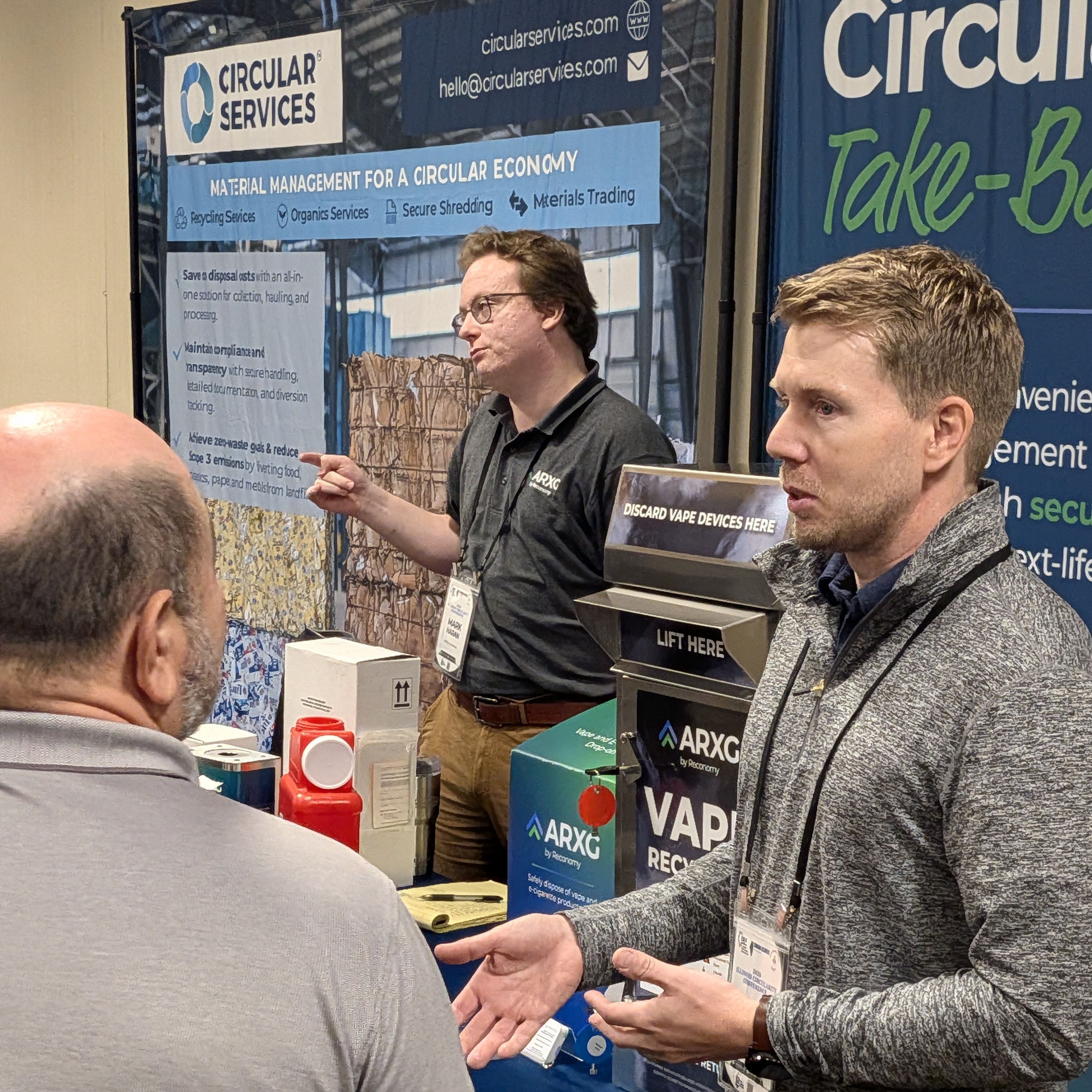
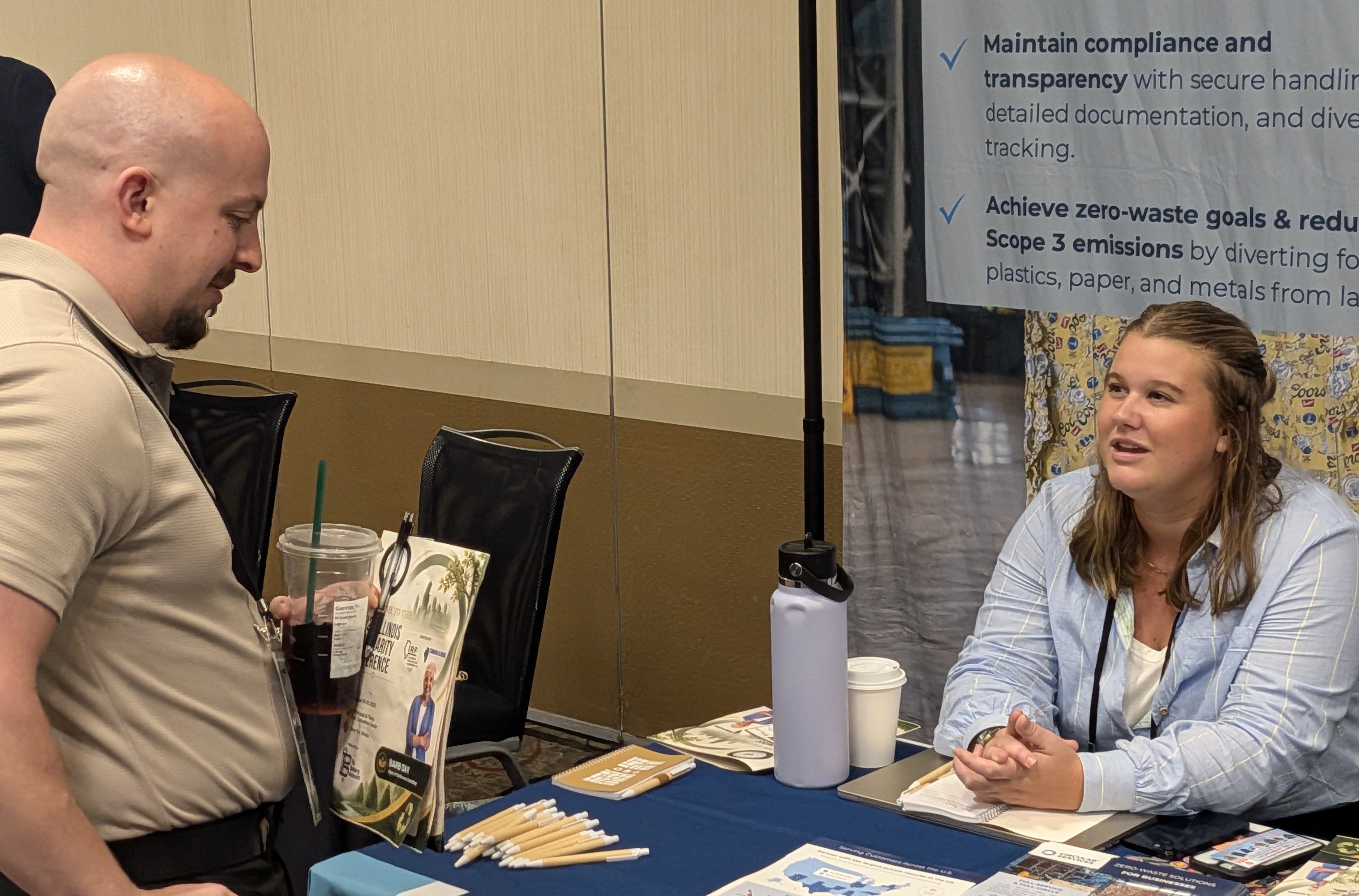
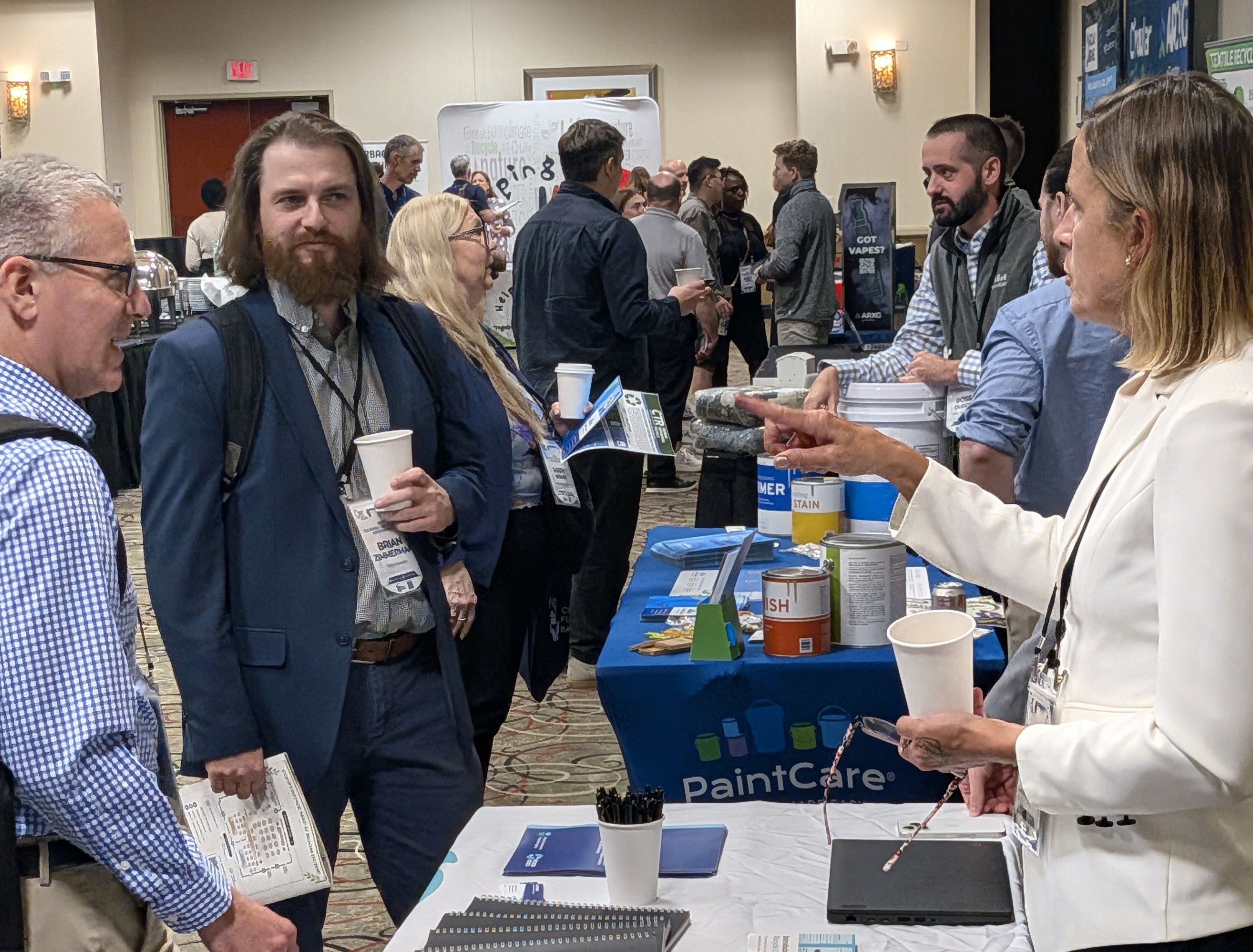
Salon B: Illinois has spent years building organics rules. Now it needs somewhere for the material to go.
While Salon A was asking whether thrift stores and furniture banks should be recognized as circular infrastructure, the parallel Day Two session in Salon B wrestled with the same question at a much larger and wetter scale. Brian Zimmerman moderated “Food Scraps Program Update: Large-Scale Organics in Practice,” pairing Walter S. Willis of SWALCO with John O’Halloran of Vanguard Renewables. Willis brought more than a decade of Illinois organics policy history; O’Halloran brought digesters, logistics and the uncomfortable reality that the nearest large-scale Vanguard digestion capacity is still in Wisconsin.
Together, they exposed one of the central problems Illinois will have to solve if it intends to move commercial food out of landfills: a law can require diversion, but it cannot manufacture a digester 20 miles away.
Illinois’ organics movement did not arrive overnight
Willis began in 2012 with a GreenTown event in Highland Park that brought together more than 100 people around food scraps and composting. The response was strong enough that several organizations kept meeting afterward, eventually creating what became the Illinois Food Scrap and Composting Coalition. Willis was among the founders and its first board chair.
Over time the coalition added research, strategic planning, members, staff and more composters, eventually broadening its name to reflect that food diversion depends on the people actually processing the material. It is now recognized as the Illinois chapter of the U.S. Composting Council, and its We Compost recognition program includes restaurants, schools, businesses, grocery stores, organizations and more than 100 municipalities that have done more than simply endorse composting in principle.
“Think back to 2012,” Willis told the room. “Now look what we’re doing.” His strategy was clear: top-down legislation is hard, so the grassroots work cannot wait for Springfield.
Illinois has been rewriting organics law for decades
Willis then walked through the legal stepping stones that made the current system possible. The foundational move was Illinois’ landscape-waste landfill ban, something he called a “ban without a plan.” Government prohibited the material first and left the infrastructure to catch up; eventually, it did. Willis said Illinois now has close to 40 permitted sites and diverts roughly 600,000 tons of yard waste annually.
Later legislation opened routes for food waste into compost facilities, created limited pathways for smaller-scale operations, allowed landscape-waste transfer stations to handle food scraps under certain conditions and, in 2015, enabled food-scrap drop-off sites. Those technical changes created the legal basis for programs residents now see as ordinary, including community drop-offs and pumpkin smashes.
Infrastructure is not always a building. Sometimes it is permission.
Feed and Conserve is the next fight
Willis then turned to the legislation he most wants to see next, organized around a hierarchy that prioritizes prevention and food donation before composting or anaerobic digestion. For covered commercial generators with viable alternatives nearby, landfill would eventually cease to be the default option.
The campaign already has significant grassroots engagement. Willis said one committee effort generated more than 600 witness slips, far more than he typically sees while testifying. Yet he warned supporters not to confuse submitting a form with political advocacy: call legislators, email them, meet them during district breaks and explain why the issue matters locally.
The scale is large enough to justify the effort. Willis said Illinois landfills roughly 2.5 million tons of food waste from commercial and industrial sources each year. Much of that system also contains edible surplus food, which is why food recovery occupies the top of the policy hierarchy. Other states have seen donation increase after organics restrictions forced businesses to look for better pathways before disposal.
The bill itself has already been narrowed dramatically. An earlier version aimed much more broadly at residential and commercial material statewide; the current approach focuses first on large commercial generators in more populous counties and phases in covered facility sizes over time. Willis explained that the eventual 9,000-square-foot threshold was chosen partly because it approximates the size of an Aldi: “I didn’t want them off the hook.”
Crucially, the requirement only applies where a permitted facility with capacity exists within a defined distance, described in the presentation as fewer than 20 miles. That condition acknowledges a basic reality: government cannot meaningfully order a business to use infrastructure that does not exist. The infrastructure question also turns the bill into economic-development policy because creating a dependable feedstock can create a reason for somebody to invest.
“Markets, markets, markets”
Food-recovery organizations have their own capacity limits. Donation sounds simple until a food bank receives spoiled product and inherits the disposal cost, or until trucks, refrigeration and staffing cannot handle the increased flow. The bill allows organizations to reject unusable food, but Willis said recovery groups remain understandably cautious about any policy that expands their pipeline without expanding their resources.
Composters face a different constraint. Food is wet and nitrogen-rich; compost systems need sufficient carbon-rich material to balance it. Even if the processing works beautifully, someone still has to buy the finished compost. Willis reduced the problem to three words: “Markets, markets, markets.”
If composters are selling everything they produce, more feedstock looks like opportunity. If finished material is already piling up, another state mandate looks like a storage problem. The same logic applies to government purchasing: laws that encourage compost production while public agencies decline to buy compost create supply without demand.
Then John O’Halloran showed where the trucks actually go
Willis built the legislative on-ramp. John O’Halloran showed what large-scale anaerobic digestion looks like on the other side. His opening story was intentionally ordinary: a few days before ICC, he was walking through his neighborhood while taking calls and noticed an Urban Canopy yard sign advertising household food-scrap collection. He did not know the neighbor, and that was precisely why the sign struck him. People outside environmental conferences are actively looking for ways to participate.
The challenge is making sure a functioning system exists after the QR code. Vanguard builds and operates anaerobic digesters primarily on dairy farms, combining food and beverage waste with manure to create the microbial conditions needed for digestion. The biogas can be upgraded into renewable natural gas, while solid and liquid digestate can return to agricultural use. The farmer receives lease revenue and useful outputs; the generator gets a non-landfill pathway; the processor captures energy.
O’Halloran said Vanguard has processed more than one million tons of food waste since 2014 and produced nearly one million MMBtu of renewable natural gas. The business model is the kind of circularity diagram that works because multiple parties have a reason to stay in the loop, but the difficult part is getting food there.
Commercial food does not arrive in a compost bucket
Industrial food waste arrives shrink-wrapped, boxed, canned, drummed and palletized. It may be a beverage recipe that went wrong, 55 drums of off-spec tomato paste, spoiled packaged chocolates or a warehouse full of product that cannot be sold. A company may be committed to sustainability and still refuse to dedicate employees to opening cases and manually emptying hundreds of containers.
That is why depackaging matters. O’Halloran’s pitch to generators is essentially: you do not have to solve the packaging problem first. Vanguard can receive material in multiple forms and mechanically separate much of the packaging while converting the organic fraction into digester feedstock. Convenience matters in industrial diversion for the same reason it matters at the curb; the warehouse manager still has a shift to run.
Illinois’ most revealing organics number may be the mileage
Where is Vanguard’s nearest digester? Eden, Wisconsin, north of Milwaukee. “I really wish we had one in Chicago,” O’Halloran said. Vanguard has discussed Illinois development, but there is no Illinois groundbreaking date. Site selection, zoning, permitting, money and local acceptance all stand between a map showing potential and concrete in the ground.
Meanwhile, the food still moves. O’Halloran said some generators have hauled packaged organics 250 miles when corporate sustainability commitments or disposal constraints justified the cost, including material moving from the St. Louis area toward Wisconsin. That is simultaneously impressive and absurd: it shows that companies are willing to pay to avoid landfill, but it also shows what Illinois does not yet have.
The environmental equation becomes complicated when the “circular” destination requires a truck to cross multiple states. The answer is not that diversion is pointless; it is that local processing capacity has real value and that Willis’ distance trigger matters. A mandate without nearby infrastructure quickly becomes a transportation policy.
Even the solution creates another question
One audience question kept the discussion from becoming too tidy. If depackaging is necessary to handle commercial food at scale, what happens to tiny plastic fragments that may escape the separation process and enter digestate or compost? Willis called it a legitimate concern and said he was not aware of sufficient research resolving the issue. O’Halloran acknowledged that some plastic can make it through depackaging systems; the digester’s immediate operating concern is whether contamination interferes with digestion, but the downstream fate of those fragments remains a reasonable question.
It was an extremely ICC moment. Solve one problem and the boundary moves. Collect the battery, then discover you need a processor. Collect flexible plastic, then discover you need a market. Depackage food, then ask where the plastic fragments go. Produce compost, then ask who is buying it. The answer is not to stop building; it is to stop pretending that moving material from one container into another completes the loop.
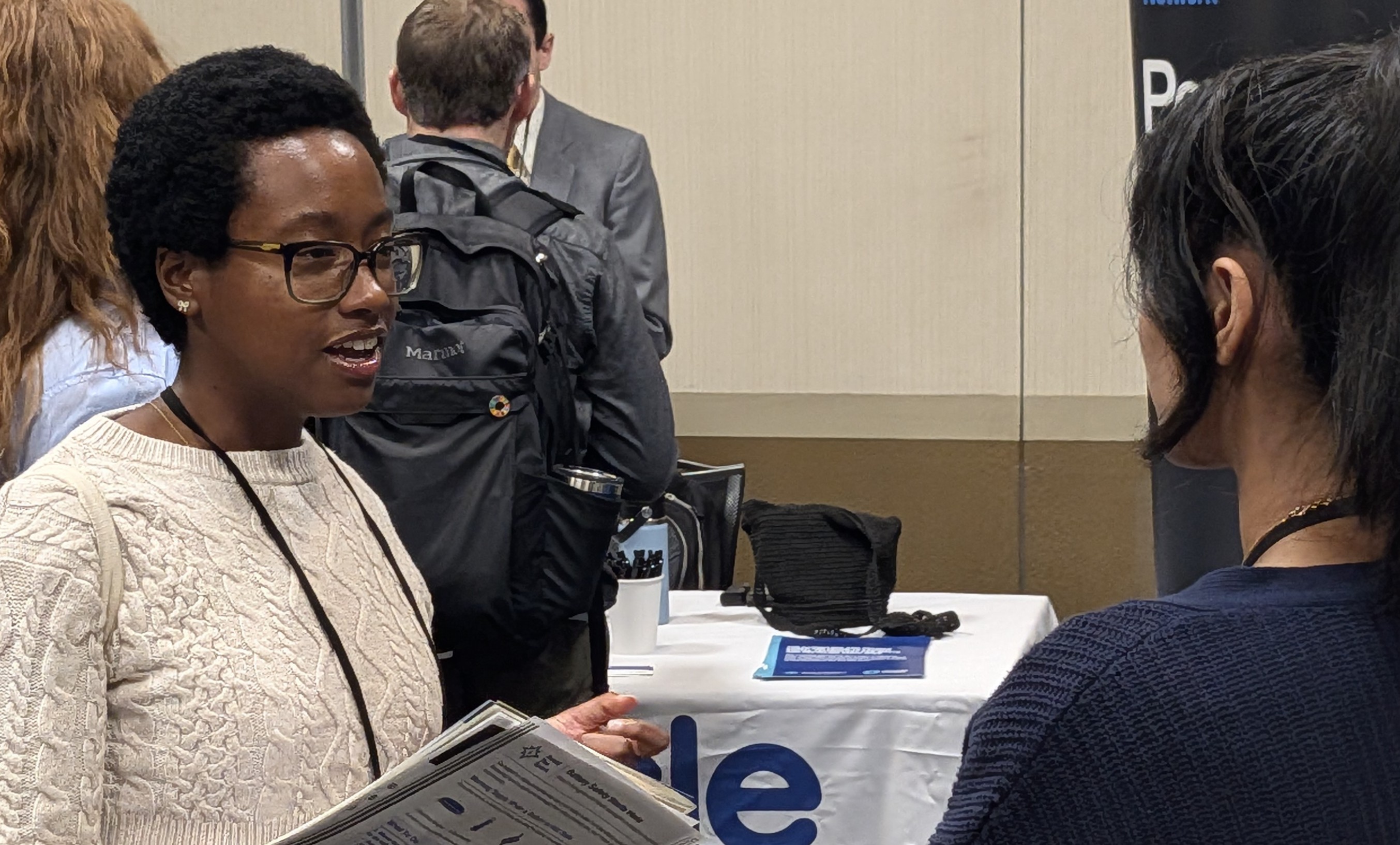
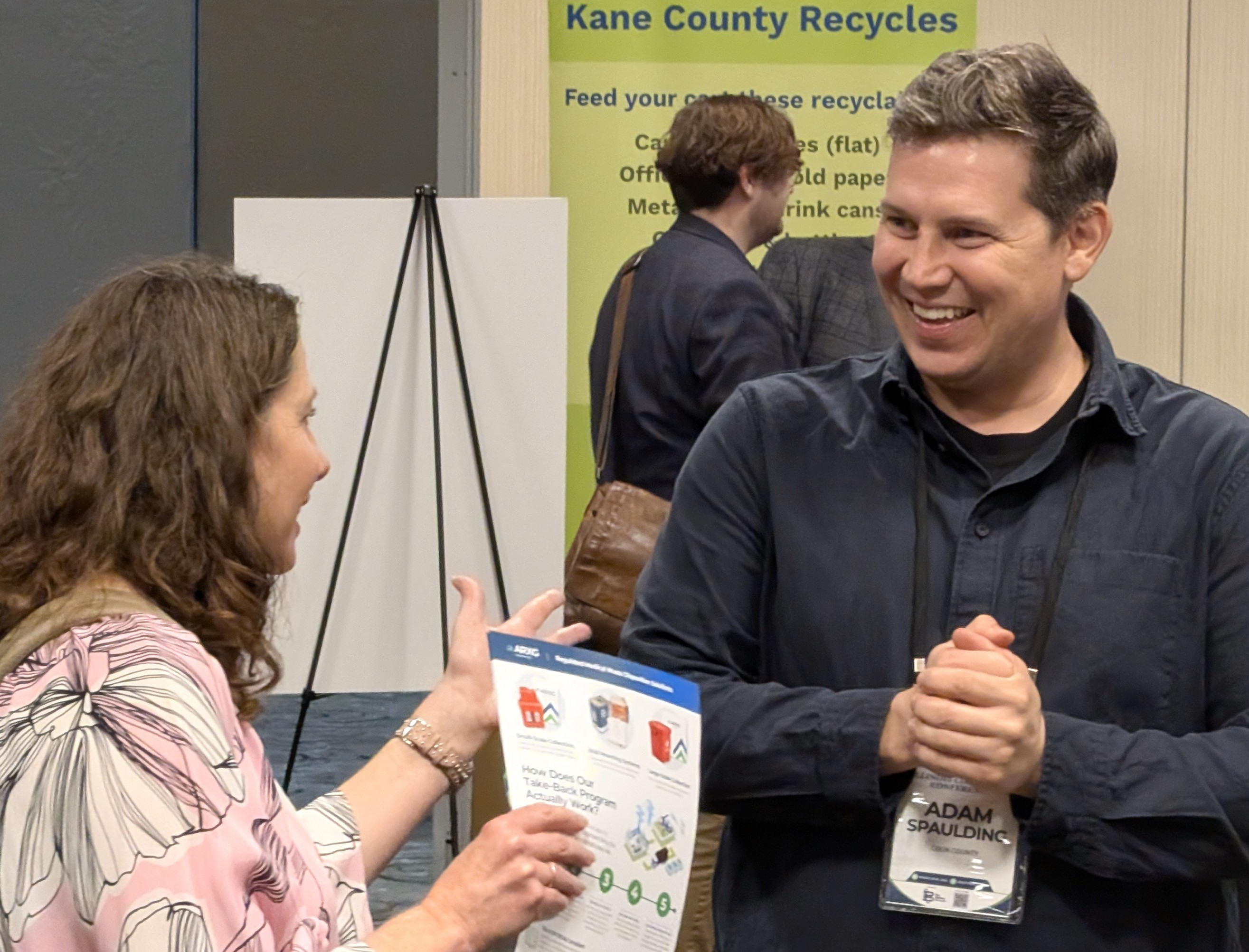
The final panel asked who gets to build what comes next
The last substantive session did not feature another regulator or executive explaining a program. It handed the microphones to the people who may still be running those systems in 20 or 30 years. Myles Barnes of DuPage County moderated the SWANA Young Professionals Plenary, joined by Betsy Ruckman, Briana Moore of Will County, Max Ehret of Republic Services and Shea Walter of SWANCC.
Their career paths themselves said something about the emerging workforce: higher education, local government, energy, air emissions, remediation, landfills, internships and public administration all converging in solid waste and circularity. Ehret said one of his favorite things about solid waste is its necessity; everyone consumes, everyone produces waste and something has to happen next. Ruckman answered differently: she likes the connectivity, the way waste professionals move between silos—facilities, governments, processors, volunteers, researchers and communities—and the culture of introducing people who need one another.
The metrics the next generation inherited may not measure what it wants to achieve
Ruckman raised a contradiction that should bother anyone using diversion rate as the master measure of zero-waste progress. At the University of Illinois, part of her success is measured by how much material is diverted from disposal, but she is also explicitly being asked to increase reuse and reduction. If the campus prevents waste from being generated while recycling tonnage remains stable, the diversion percentage can actually get worse because the denominator shrinks.
That means an institution may genuinely prevent waste and appear less successful under the metric designed to measure success. The industry has spent decades learning how to count what it collects; it is still learning how to count what never existed. The issue connected back to something Ruckman said earlier about design: after spending time “neck deep in trash,” sometimes literally, she came to see how unfair it is to tell consumers they are responsible for recycling products that were never designed to be recyclable.
Her answer is to move upstream through EPR, eco-modulation and system design. “The whole room is full of system changers,” she said. That may have been the best description of the ICC audience.
Young professionals are not asking AI to do all the thinking
Because this was a young-professionals panel in 2026, artificial intelligence eventually arrived. An audience question asked how AI is affecting their work, and Ruckman’s opening advice was concise: “Quit using gen AI for stuff you could Google.”
Her larger point was more nuanced. Operational machine learning and image-recognition tools can transform waste characterization and sorting, potentially reducing hours of manual material identification. That is different from handing ordinary writing, communication or thinking to a generative model merely because it is available. Walter described the tension from higher education, where students increasingly use AI for assignments, résumés and interview preparation, while Ehret offered a field perspective in which much of closed-landfill work still depends on experienced operators noticing specific conditions because they have seen those systems behave before.
The panel was not choosing humans over technology. It was asking the industry to know the difference between automation that extends expertise and automation that replaces thought.
What young professionals want from the people already in charge
One audience question asked what established leadership could do to help younger professionals thrive. Ehret asked managers to remain open to new ideas even when every experiment does not work. Giving a younger employee permission to test a technology or suggest a different method creates agency and confidence.
Moore’s answer was more personal. She is in her current recycling role because someone looked at how she worked and told her she might be good at it. That kind of nudge matters because younger professionals often carry substantial imposter syndrome. Leadership can identify strengths the employee has not yet named, offer useful feedback and open a door before the person on the other side is fully convinced they belong there.
“Imposter syndrome is real,” Barnes said. The succession problem in environmental work is often discussed as though recruitment means posting a highly specialized job and waiting for the ideal résumé. The panel suggested something much more human: sometimes the energy-efficiency employee becomes the recycling specialist, the emissions tester becomes the landfill manager and the undergraduate intern returns for graduate school because someone already in the field recognized potential.
Their ambitions were strikingly practical
Barnes closed by asking where the panelists hoped to be in 10 or 20 years. Ruckman gave what almost qualifies as a radical answer in a professional culture obsessed with constant advancement: she wants to be where she is. She wants to stay at the University of Illinois, learn the work deeply, know the people around her and put down roots. “I want to do my job,” she said. “I want to get good at what I’m doing.”
Walter, beginning a master’s degree in public administration, wants eventually to be in a position to make decisions that reduce waste and emissions. Ehret wants to manage his Hillside landfill so well that nearby residents can almost forget it exists, in the good sense; on a broader cultural level, he also wants sustainability to become something people see themselves in and think is cool.
Moore’s ambition may have been the most relatable for anyone who has ever answered a recycling hotline. She wants a good, correct answer when someone calls with the obscure object they have kept in the basement for 15 years because they cannot bear to throw it away. She hopes that by the time she has developed that enormous base of practical knowledge, the system will also have evolved enough that she has to tell people “throw it in the trash” far less often.
And then there was one last drawing
The panel ended, but the conference had not quite finished. There were people to thank, prize cards to collect, a bus waiting outside and four $50 prizes still to draw. The closing remarks thanked attendees and speakers first, with a point worth preserving: the program worked not because of some magical act of conference planning, but because people with real expertise were willing to spend their time explaining what they know.
Sponsors came next, led by The Battery Network, whose support helped keep registration costs from, in the closing formulation, “creeping into the stratosphere.” Then the thank-yous became increasingly circular themselves. Erica, whose vinyl set had carried the previous evening, had pointed out that the mixer she used had itself been headed toward recycling before being rescued. The computers running the conference were refurbished machines supplied by PCs for People. At an event spent arguing that products should remain useful longer, the conference had apparently been operating on equipment somebody else had already given another life.
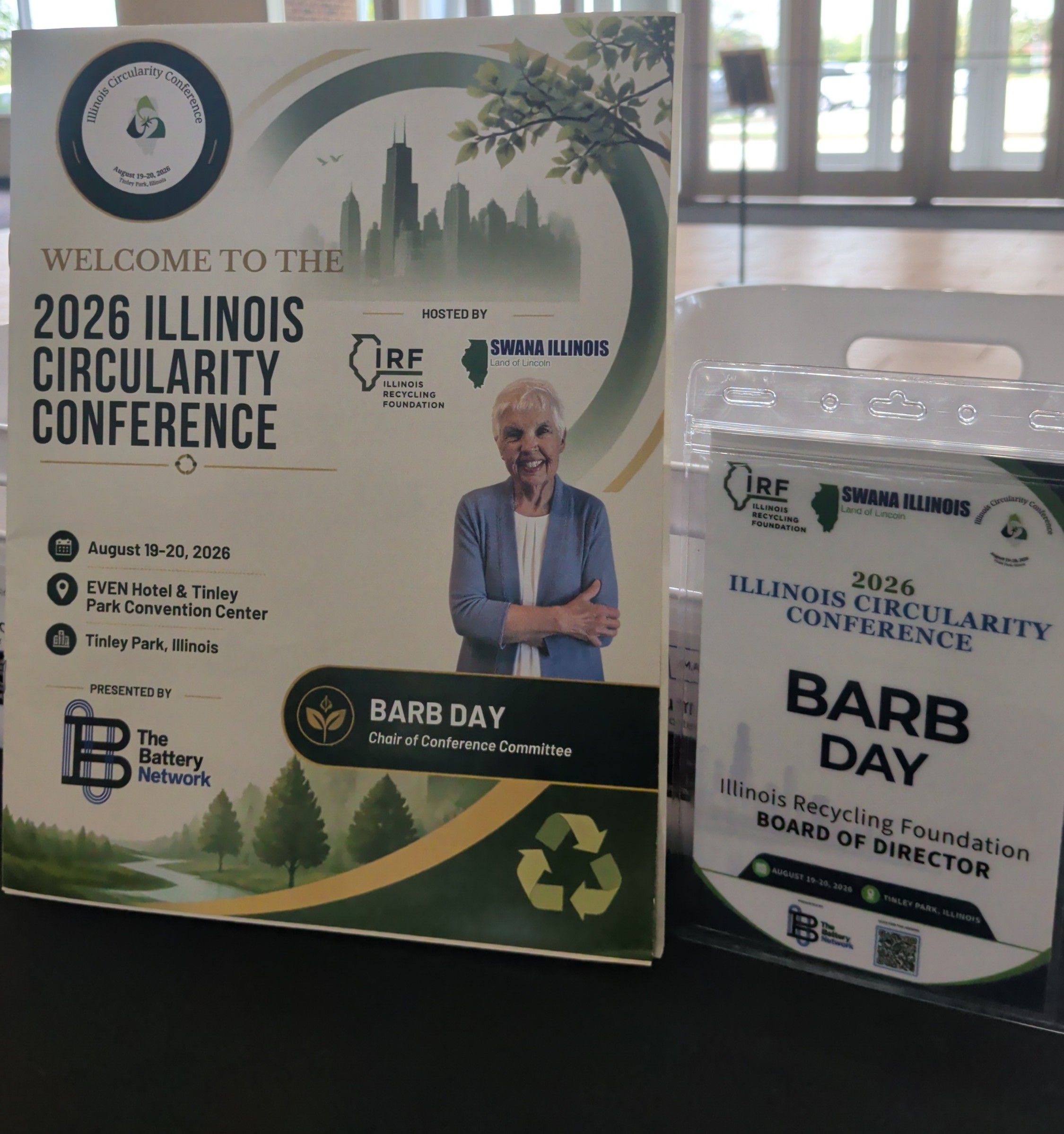
There was also recognition of Barb Day, prominent in the printed conference program but unable to attend because she needed to prioritize her health, and of the planning team and volunteers who made the event function. Then came the announcement for the next gathering: the 2027 Illinois Circularity Conference will be held June 2–3 in Springfield, Illinois.
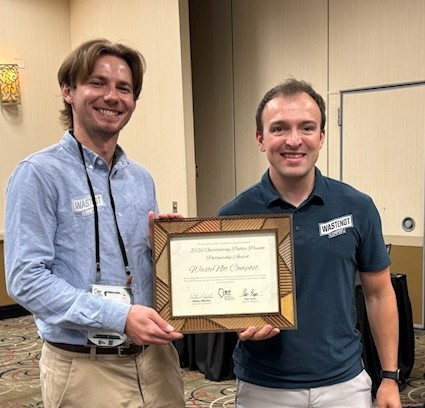
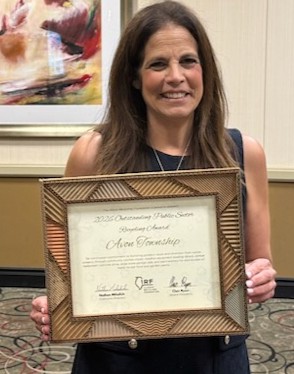
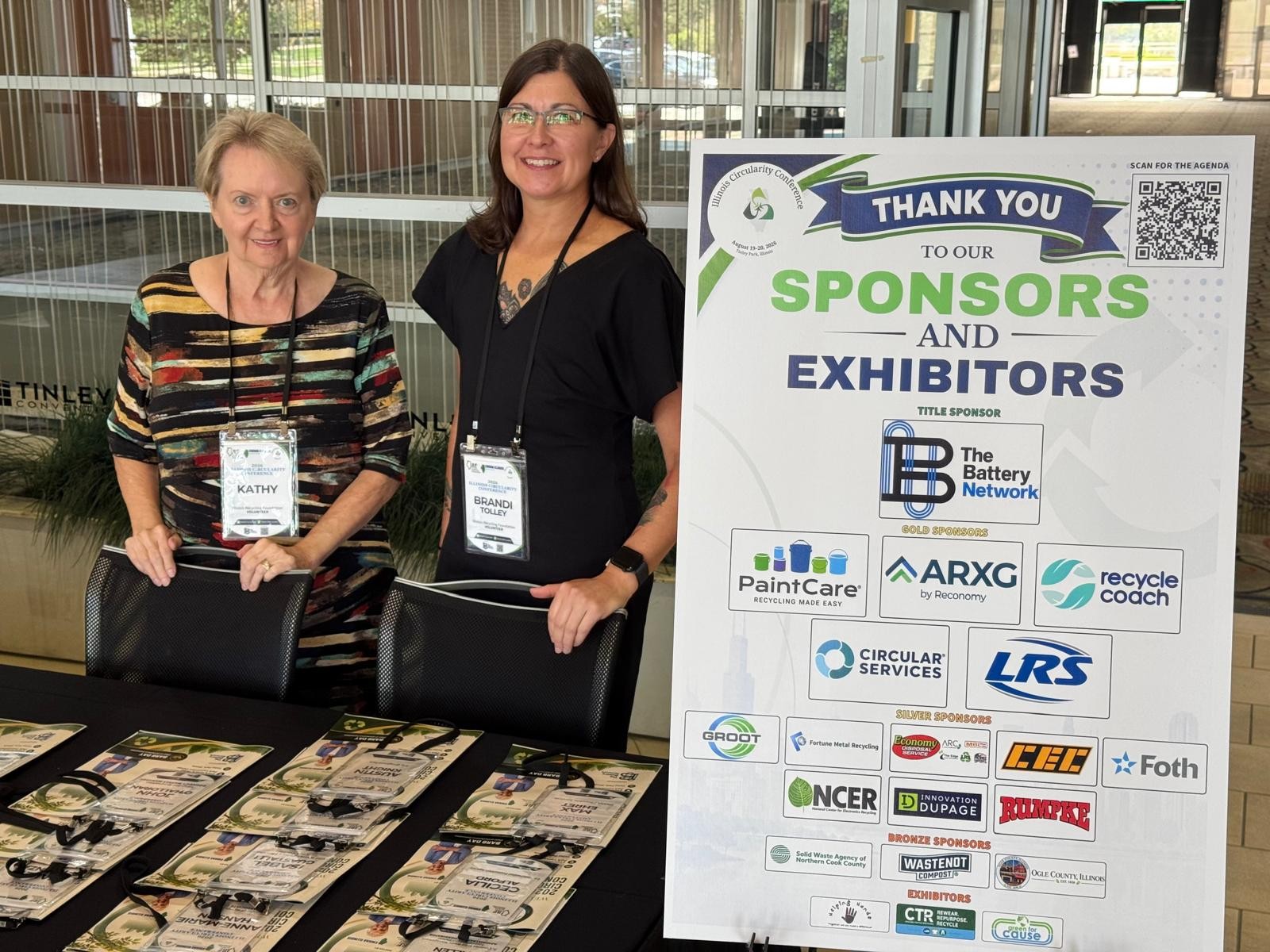
The field-trip bus was waiting, but first came the money. Four $50 prizes were drawn from completed exhibitor sticker cards, with different people picking the winners to avoid any appearance of favoritism. The final card came from the bottom of the pile, and then something unusual happened at the end of a conference: all four winners were still in the room.
“That’s so exciting,” came the reaction, “because usually people leave early.” The cards had done what they were designed to do. Attendees visited exhibitors, collected stickers and remained engaged enough to still be standing there at the end. Then the goodbye arrived: “Thanks again and enjoy the field trip. I’ll see you next year, if not before.” A few minutes later, another announcement came through—the bus had arrived early and tour participants should start heading outside.
After two days spent discussing how difficult it is to move material through complicated systems, the final logistical challenge was comparatively simple: get the people onto the bus.
What connected everything
By the end of the conference, an unexpectedly consistent idea had surfaced across presentations that, on paper, had very little in common. A battery collection box is not a circular battery economy. A blue cart is not an end market. A compost bucket is not an anaerobic digester. A packaging law is not a reporting system. A grant appropriation is not a grant award. A recovered ton is not necessarily a marketable commodity. A technically proven machine is not infrastructure if nobody nearby knows how to install it. A thrift store accepting 350 cars a day is not simply a charity storefront, and 712 semitrailers of furniture are not a side project.
Collection is the front half. The back half is processing, markets, financing, information, accountability and people.
The battery sessions found that wall in missing domestic processing capacity. The statewide needs assessment found it in flexible film without an end market. George Ward found it in the difference between a mixed paper grade and clean fiber. Green Era found it in the capital markets, while Bubbly Dynamics found it in a contractor’s bid. Walter Willis found it in compost without enough buyers; John O’Halloran found it in food being hauled toward Wisconsin because Vanguard’s nearest digester is in Eden, Wisconsin, and the company does not yet have an Illinois facility underway. Salt & Light found it in books, electronics and a $10,000 monthly trash bill, while Chicago Furniture Bank found value where another system saw an unwanted sleeper sofa.
Everything at ICC depended on somebody else. Green Era needs feedstock, customers and capital. WasteNot’s model depends on resident participation, clean source separation and strong municipal partnerships. Processors need reliable material and markets. Composters need carbon and buyers. Furniture banks need donors, trucks, warehouse workers and families who actually want what is recovered. Reuse organizations need space and labor. Restaurants need suppliers they can trust to show up. Municipalities need data. Illinois EPA needs staff and procurement capacity. Producers need laws that can actually be implemented, and residents need instructions somebody has bothered to make understandable.
That is why the Vogel-Jennings keynote ultimately belonged at the beginning of this particular conference. Their relationship was another version of the same system: two governments with real disagreement that still require functioning connections between them. Circularity is built on those connections—between materials and markets, policy and implementation, a bucket at a curb and a processing tank, a donation dock and a second home.
The circular economy is no longer principally an environmental diagram made of arrows chasing one another around a product. It is becoming an operating system, and operating systems are messy.
What to watch next
| Late August 2026 | Non-packaging portion of the Illinois statewide needs-assessment draft. |
|---|---|
| September 4, 2026 | Comment deadline Vogel highlighted for U.S. EPA’s draft PFAS-in-biosolids guidance. |
| November 1, 2026 | Final Illinois Statewide Recycling Needs Assessment due. |
| December 1, 2026 | Jennings’ target for initial Illinois EPA recycling and composting grant awards, contingent on procurement. |
| Late 2026 / early 2027 | Illinois EPA’s anticipated site-remediation rulemaking update. |
| Early 2027 | Illinois embedded-battery study expected, covering roughly 30,000 products. |
| 2027 | Consumer Electronics Recycling Act changes take effect. |
| Early 2028 | Illinois EPA target for electronic permitting and reporting modernization. |
| January 1, 2028 | Illinois disposal prohibition for covered single-use batteries takes effect. |
| 2035 | Recycling targets modeled at 35, 50 and 65 percent by individual material category. |
And then the ballroom emptied. Some attendees headed home. Others climbed aboard the tour bus for the CHaRM Center, Green Era and PCs for People—places where batteries, food waste, electronics and hard-to-recycle materials stop being conference topics and become physical things somebody has to handle.
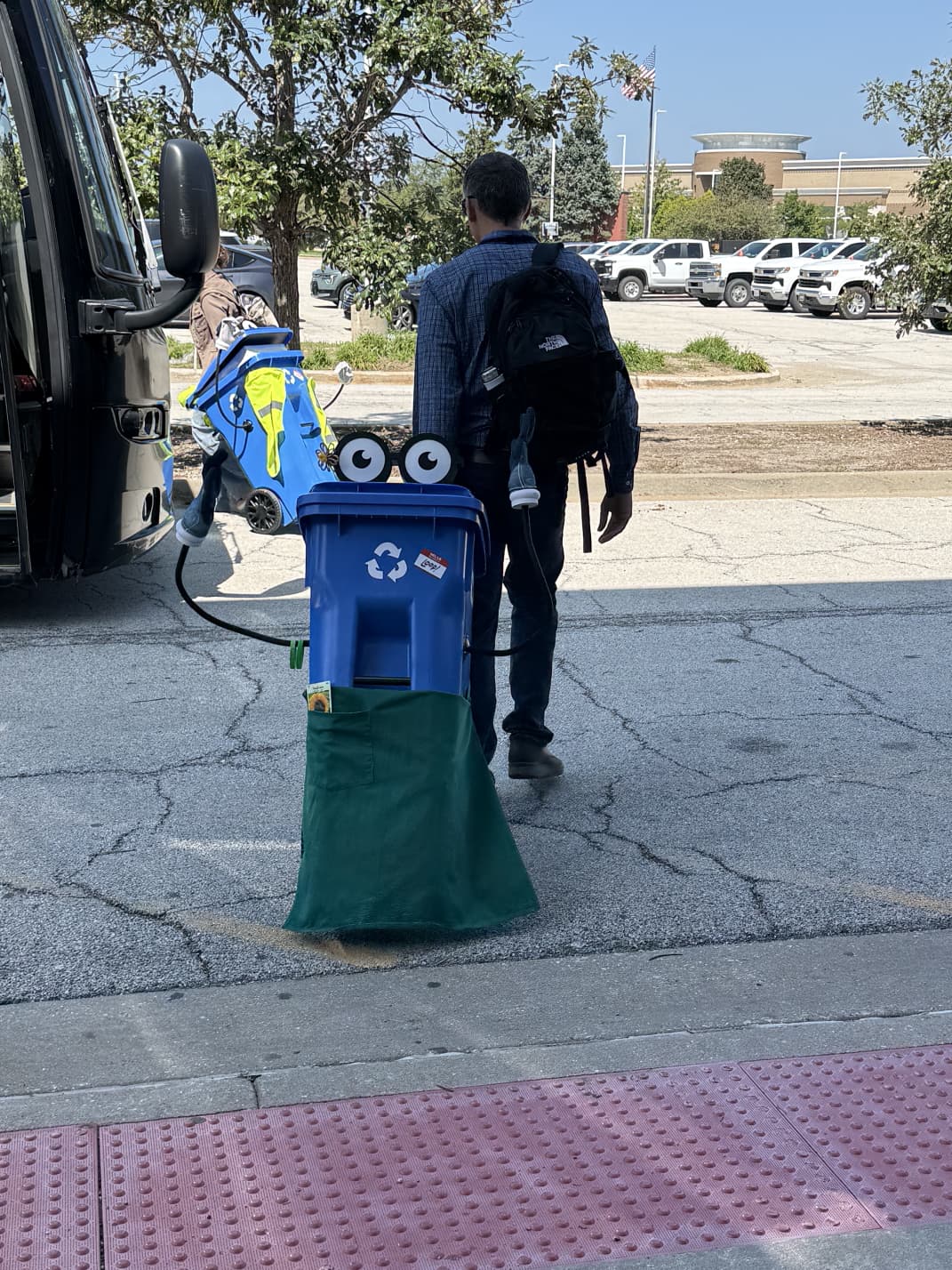
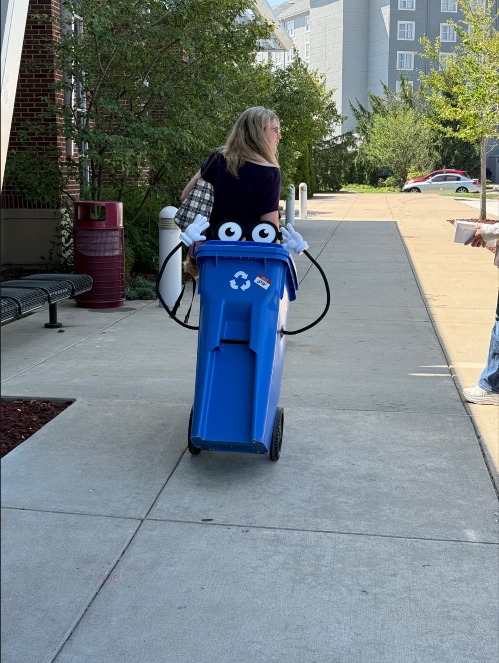
Eventually somebody has to collect it, sort it, repair it, process it, sell it, finance it and explain it. Somewhere, someone has to decide whether the object in front of them is trash, feedstock, inventory, a social service, a commodity or simply a product that was not finished being useful.
That is where Illinois’ circular economy is now being built.
The Illinois Circularity Conference returns in 2027.
Springfield, Illinois. Join the Illinois Recycling Foundation, SWANA Illinois and circularity leaders from across the state as the conversation moves from the lessons of Tinley Park into the next year of implementation.
Visit the conference websiteConference photography: Illinois Recycling Foundation. Reporting compiled from session recordings; figures presented as draft or preliminary by speakers are identified as such in the text.
🩺 And an extra-special thank you to Dr. Peter Hofmann and Nurse Donna of Springfield Clinic for going above and beyond to perform an emergency procedure on our Executive Director just one day before the event—making it possible for him to be there and helping ensure the conference could move forward as planned. 💕